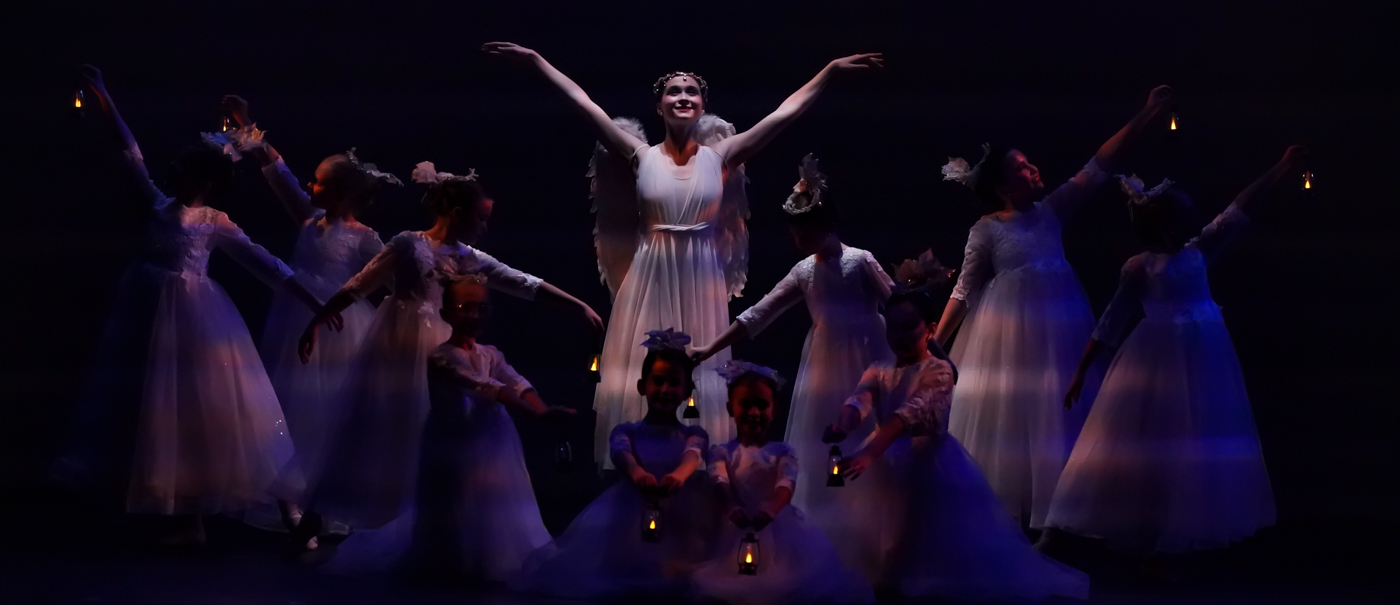
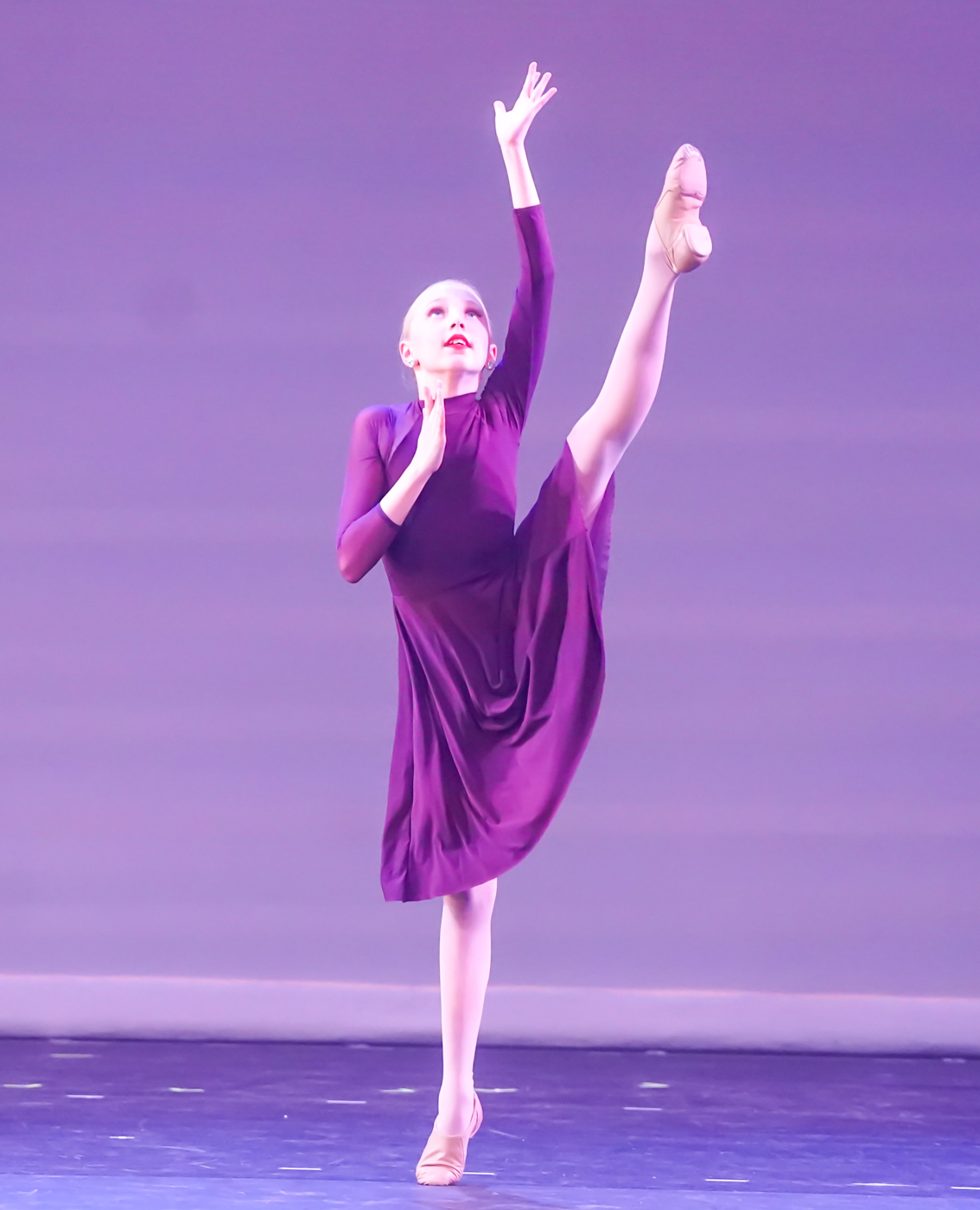
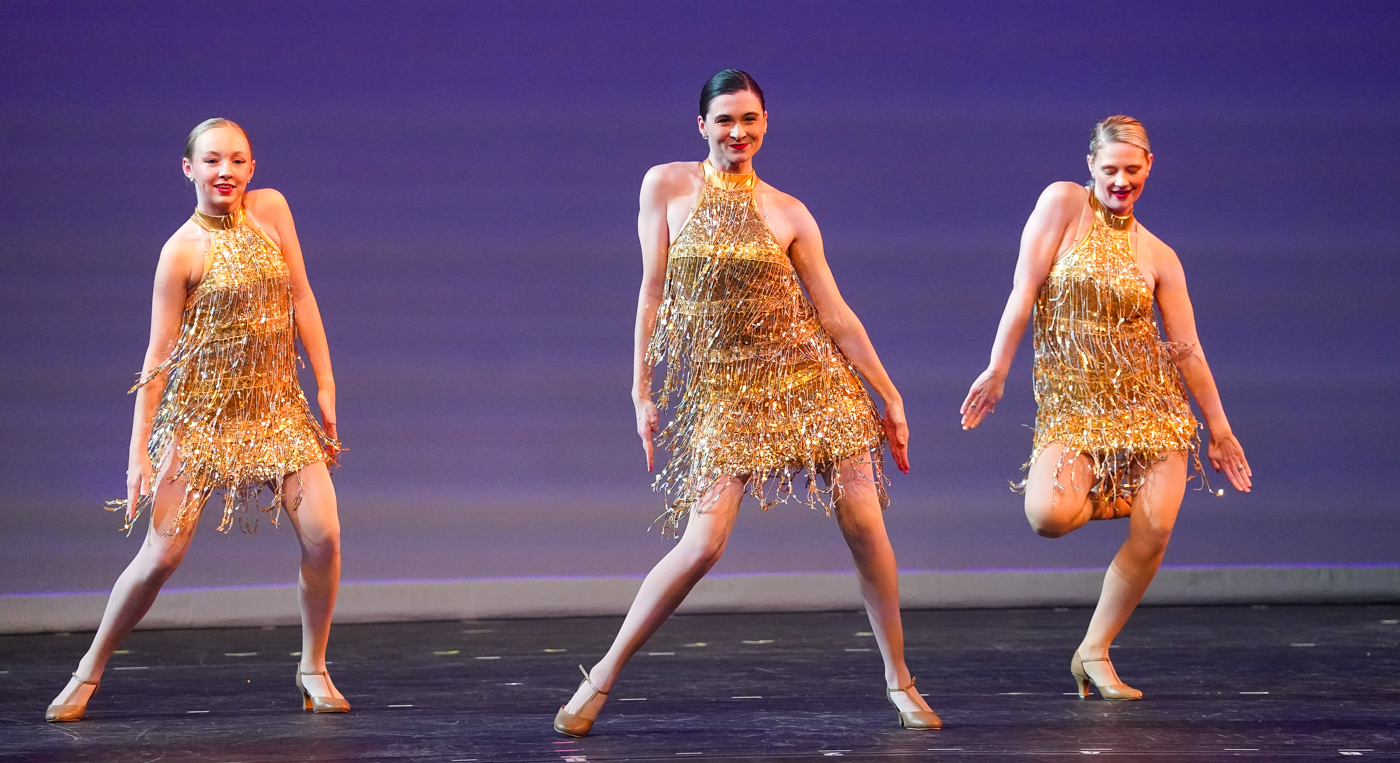
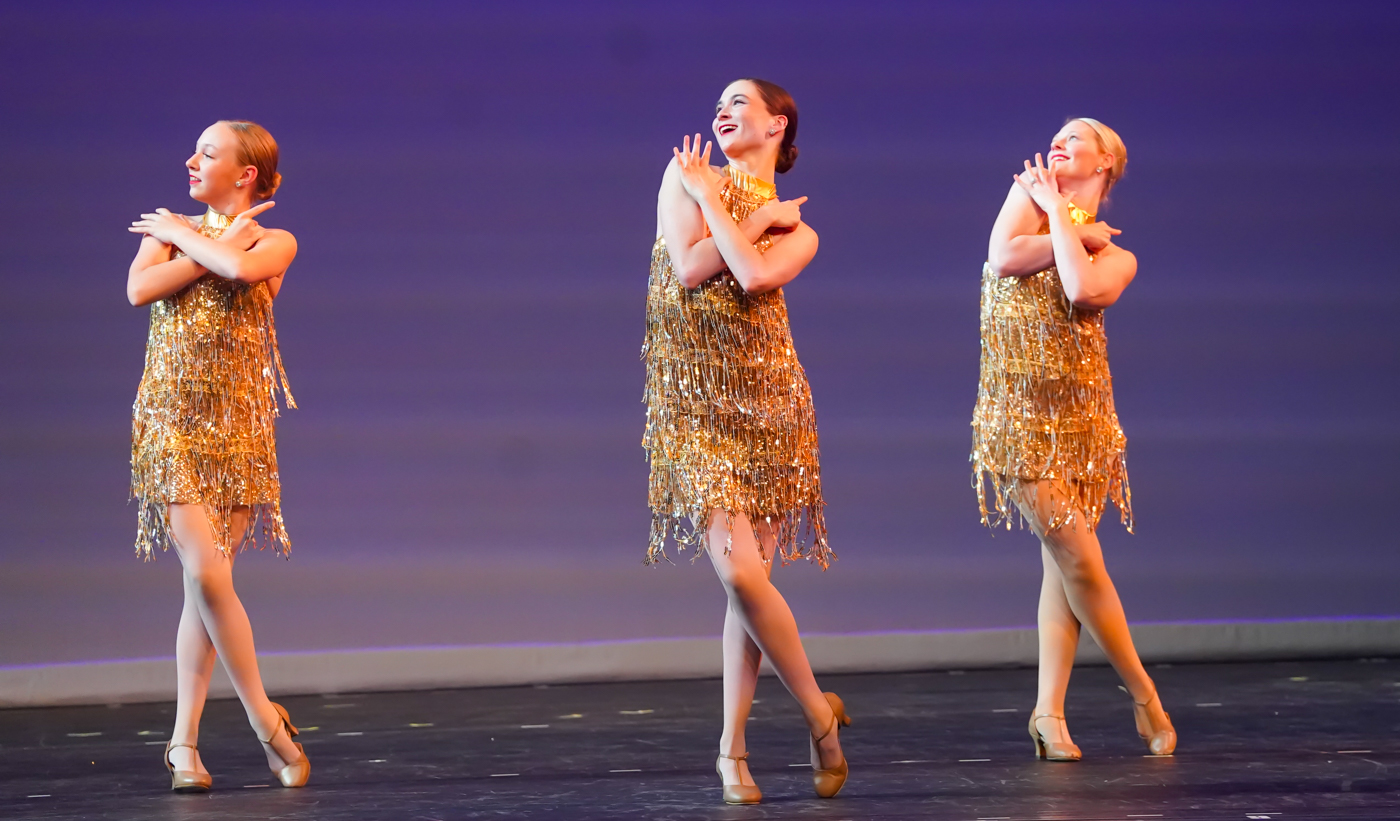
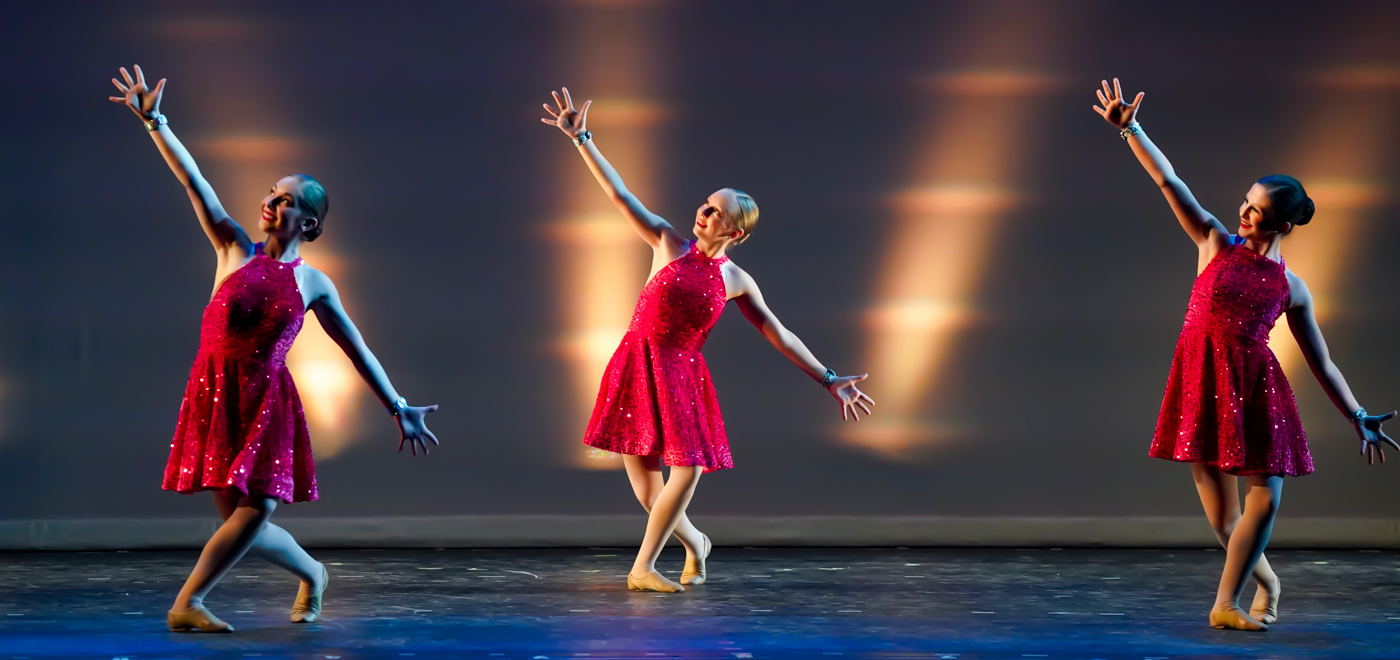
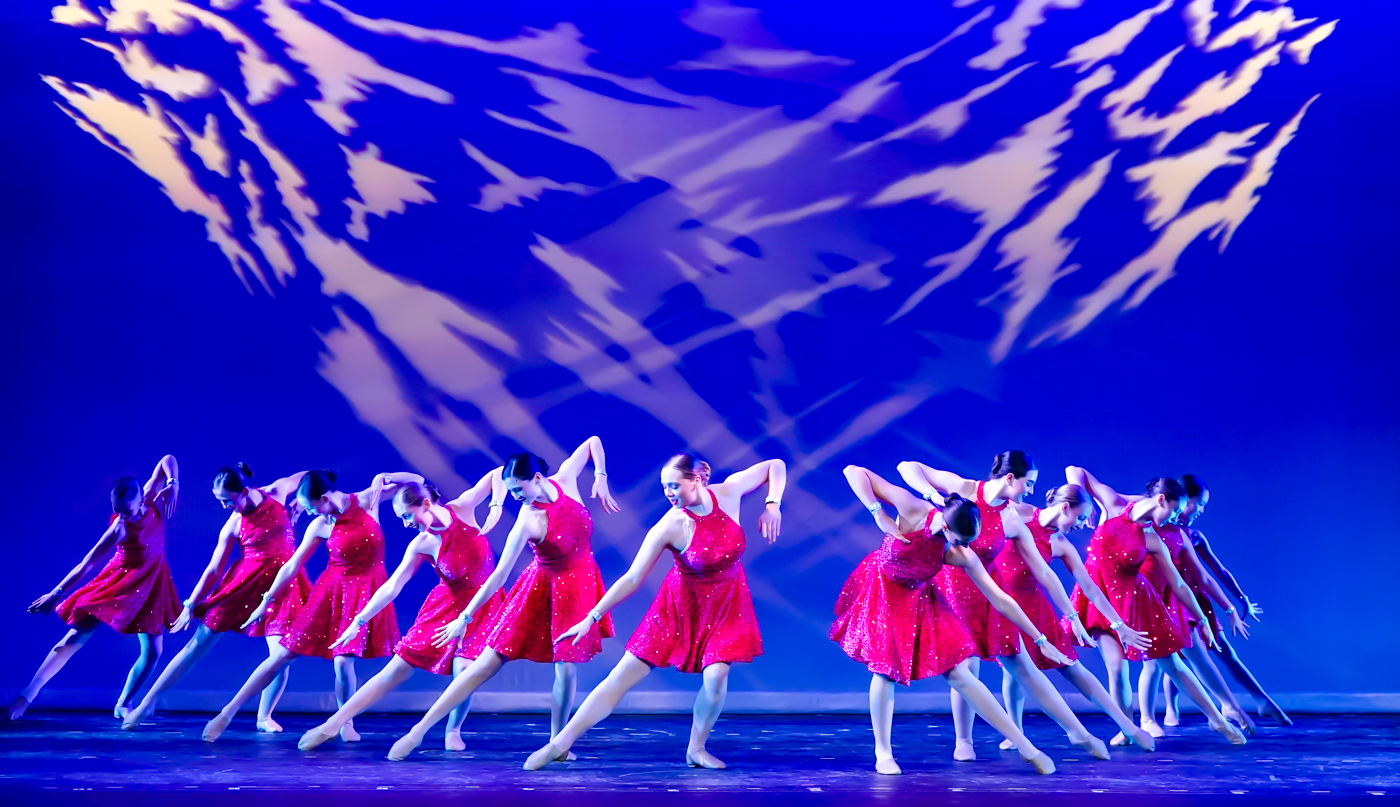
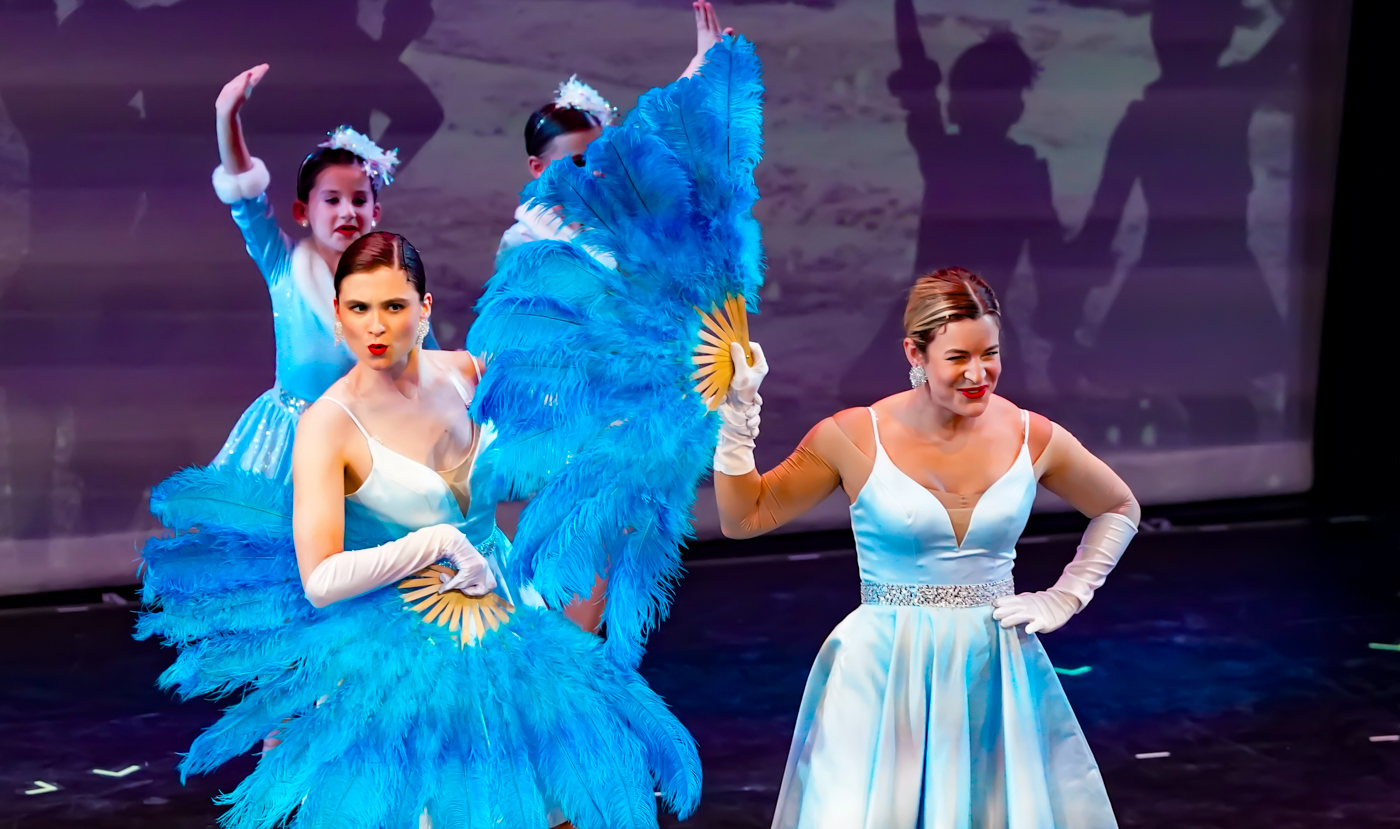
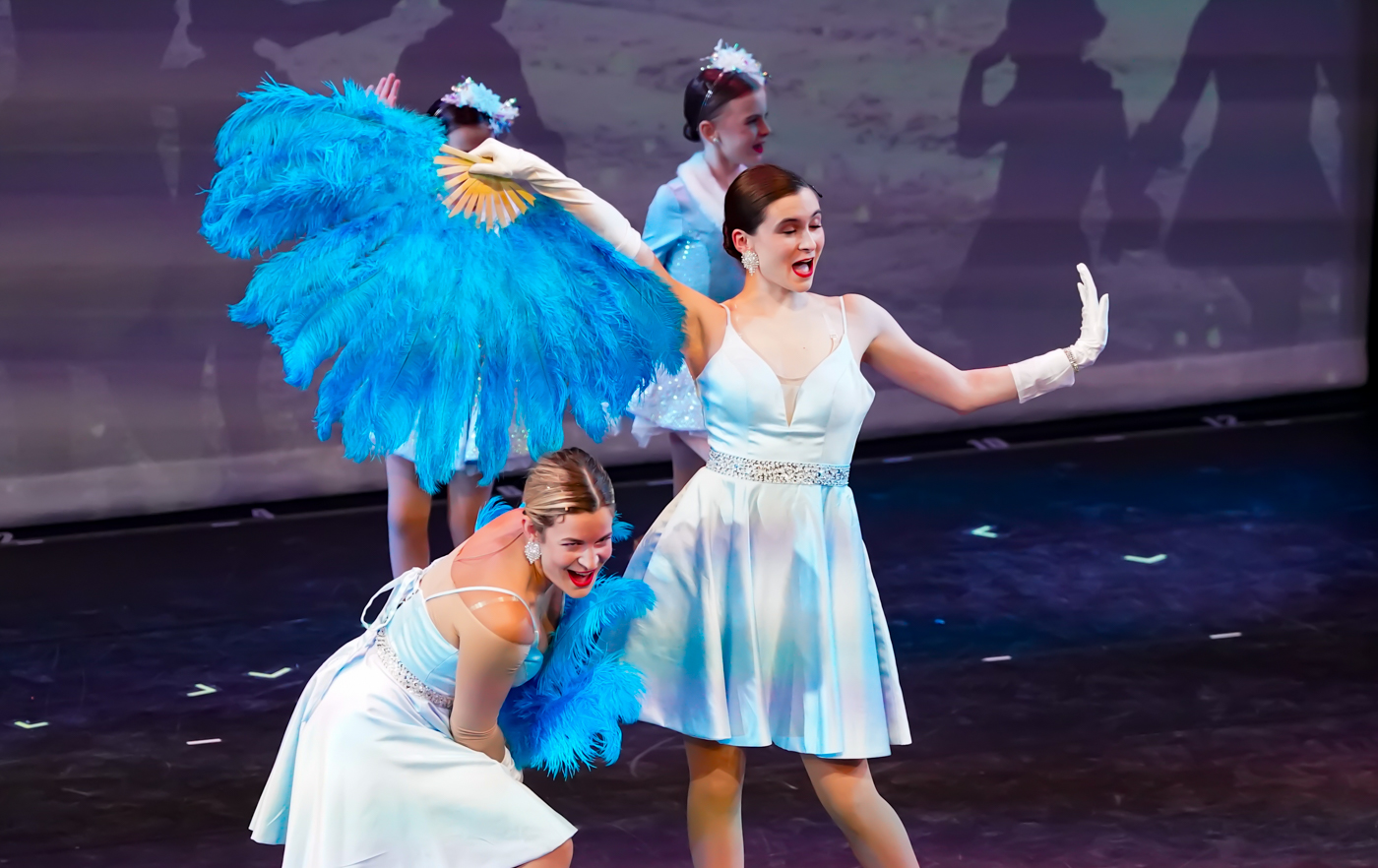
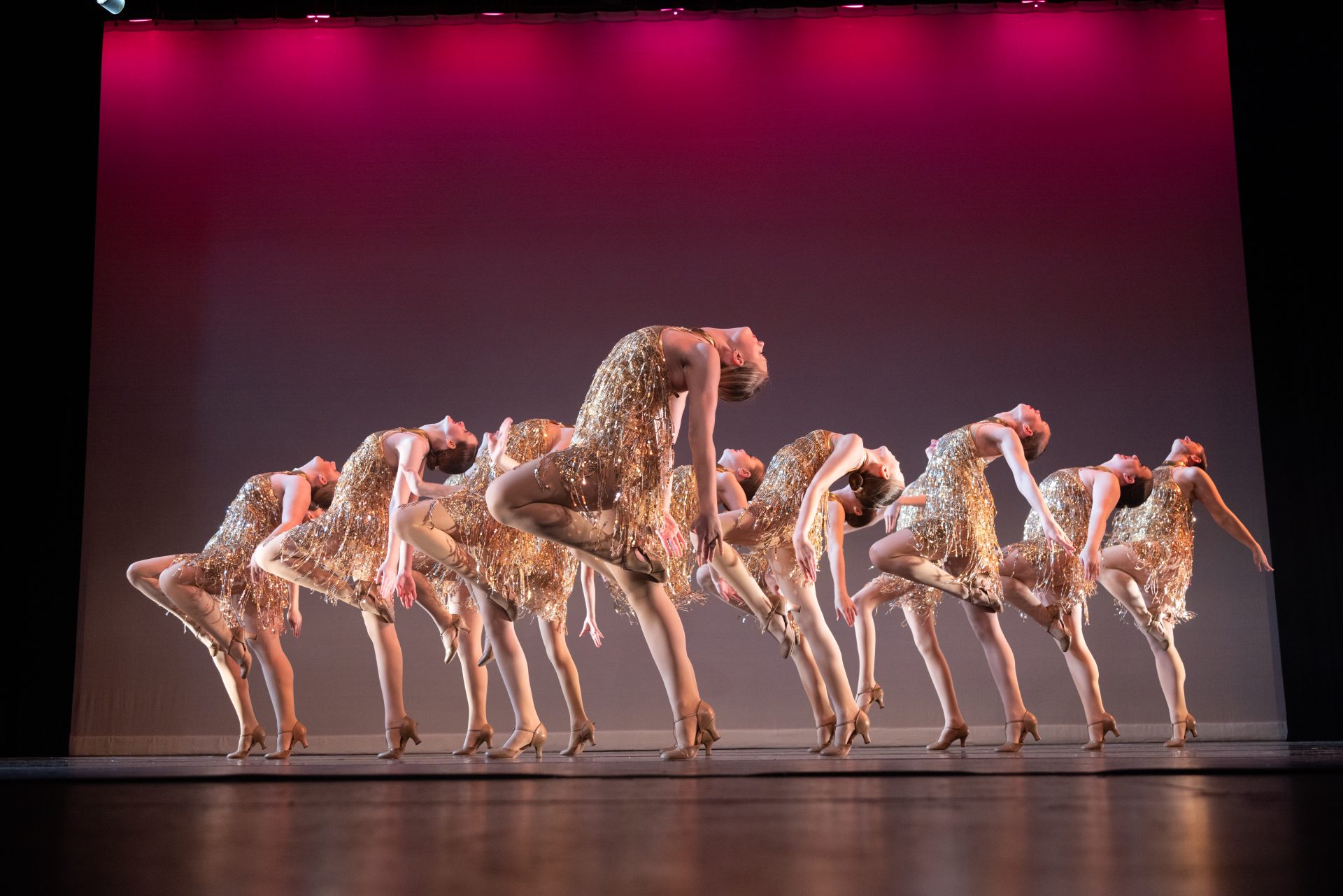
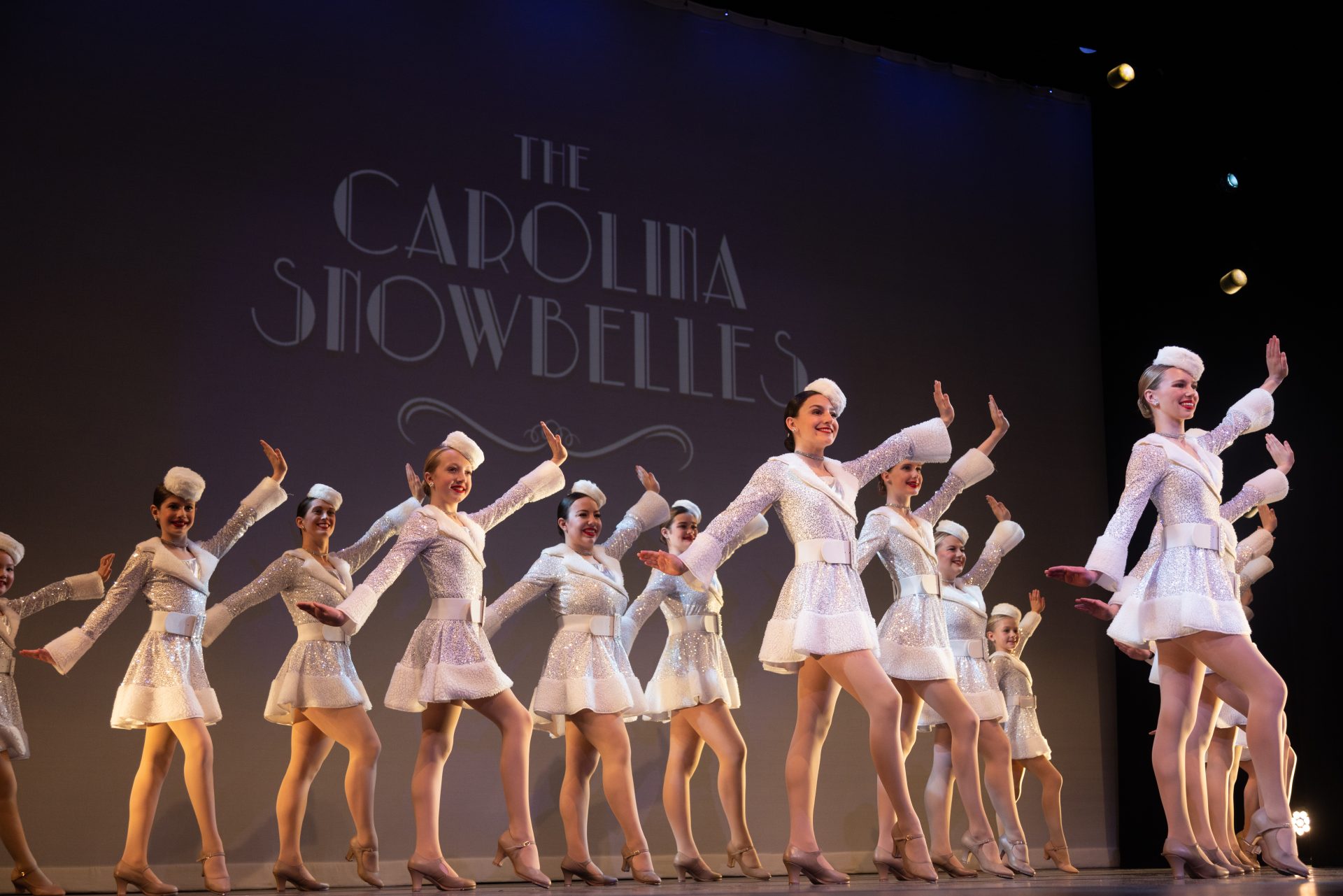
By David Rogers. BOONE, N.C. — Arms, legs, elbows, and kneecaps flying in all directions, in perfect synchronization… Yep, it was the 2025 edition of “A Carolina Snowbelles Christmas.” The slick production featuring the Carolina Snowbelles and special guest performers was the best yet: entertaining, creative, bold and beautiful in all respects.
BONUS PHOTOS at bottom of article (click any image for larger version and to launch Slide Show Mode)
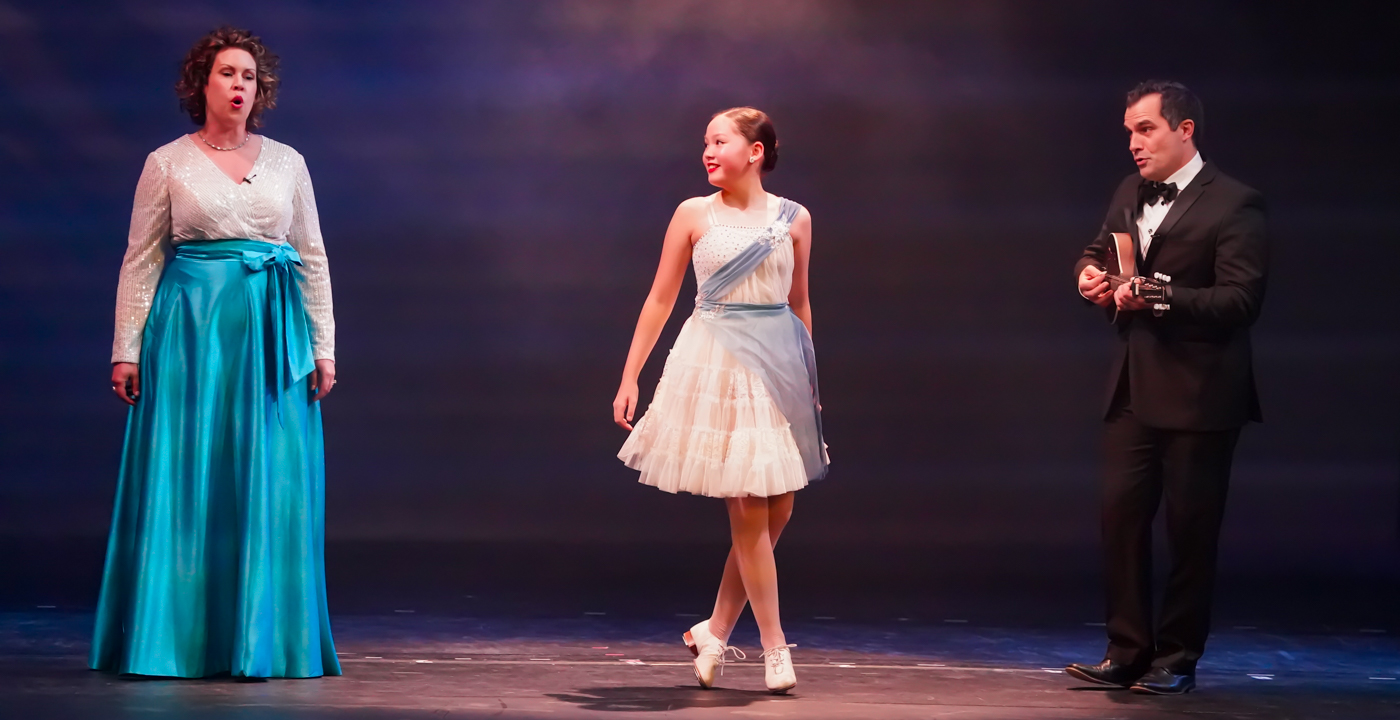
Few live performances can possibly match the Snowbelles’ Christmas-themed show for getting in the holiday mood. Opening with “Happy Holidays,” featuring guest vocalists Gennard and Christy Lombardozzi, was the perfect introduction for what would come. And with seamless transitions deftly moving the pieces from one dance or musical piece to the next, it was minute-by-minute enchantment.
Photographic image by David Rogers for High Country Sports and Blowing Rock News
The show featured dancers from 6 years old to adults, including Emma Dees, a Snowbelle alum who turned professional and spent two years touring internationally in Costa Rica, Peru, and Southeast Asia before returning to Boone where she continues to train and perform. Serving as a teacher and choreographer for the Snowbelles’ parent organization, The Space @ Project Dance, Dees also serves as the organization’s Director of Student Life.
Also performing with the Snowbelles this year is Brooke Handy, yet another professional dancer and choreographer. After graduating from the North Carolina School of the Arts, Handy started work with the Bill T. Jones/Arnie Zane company in New York City. Her adventures include the Kyoto International Arts Festival in Japan, the American Dance Festival and Paul Taylor Dance Company immersive, dance intensive workshops. Like Dees, Handy also dances, teaches and choreographs for The Space @ Project Dance and the Carolina Snowbelles.
An oft-featured performer for the Snowbelles in the Christmas themed show was local dancer and second-year choreographer Journey Lockhart. Beginning at age 15, Journey is already a signed professional actress and also competes in track and field. Not surprisingly, her dream job is to one day perform with the Radio City Music Hall Rockettes of which the Snowbelles are modeled after.
Any of the Snowbelles looking for a step toward the Rockettes are in the right place, given that The Space @ Project Dance and Carolina Snowbelles director Cheryl Cutlip spent 15 years with the Rockettes and returns every April with the Snowbelles for live performances in an outdoor free concert on a pop-up stage in Times Square, where Broadway, 7th Avenue and 44th Street all come together. Under Cutlip’s direction, the Snowbelles Christmas performances showed off the hard work and athleticism of her charges, from the young “Snow Flurries” to the more veteran and accomplished Snowbelles.
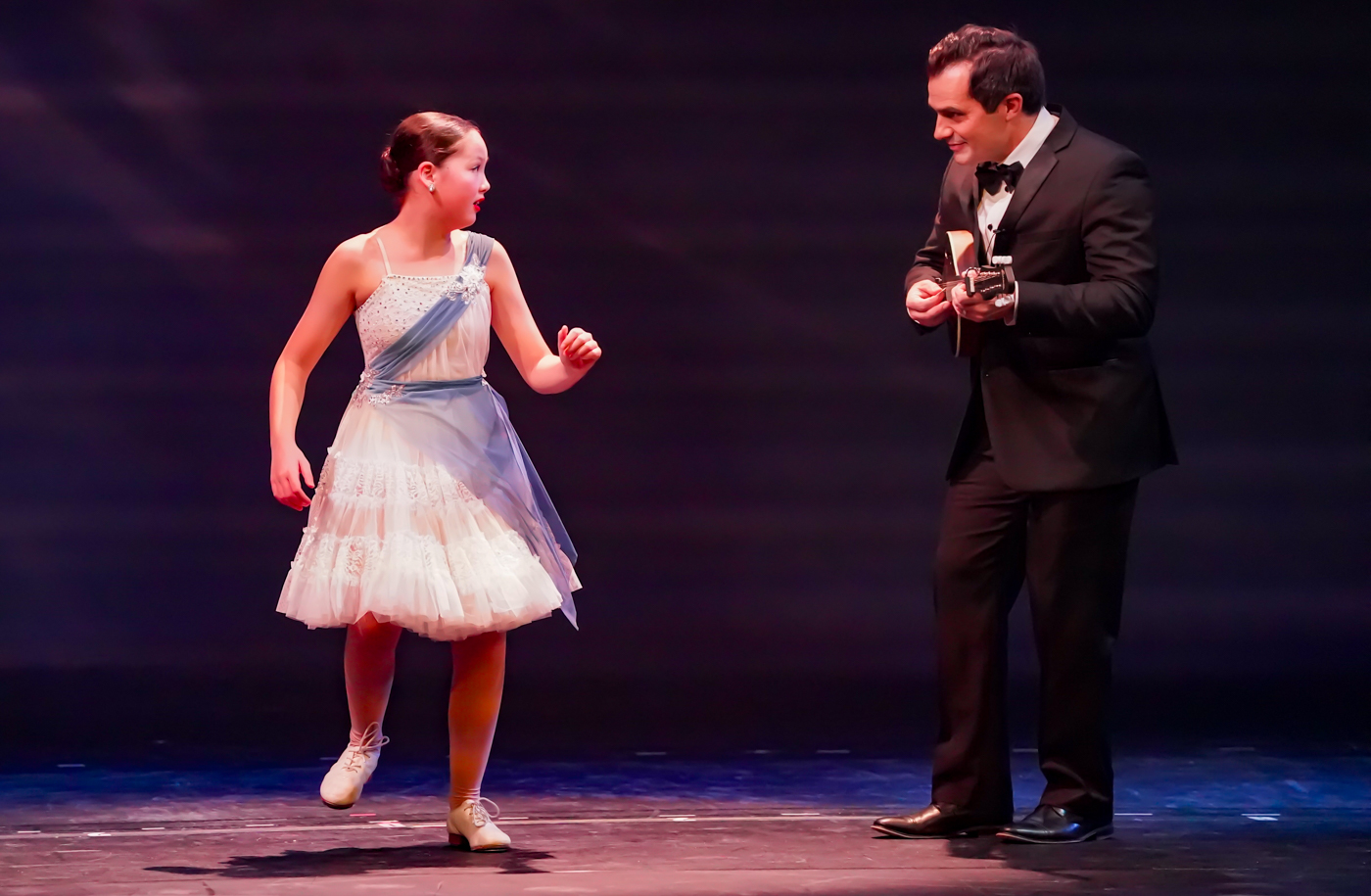
A special added attraction for the 2025 show was incorporating vocal performances by Gennard and Christy Lombardozzi and Boone native Chelsea Mudiam. The Lombardozzis both have opera backgrounds, but also included more traditional Christmas music in their Snowbelles Christmas performances.
Christy has performed on stages throughout the U.S. and Europe. Gennard has been similarly successful as a performer in opera, oratorio and musical theater throughout the U.S., Europe and Asia. He is currently an Associate Professor of Voice at App State’s Hayes School of Music. The Lombardozzis live in Blowing Rock and were anxious to perform in the Snowbelles Christmas show after young daughter, Maebel, became a member of the Snow Flurries.
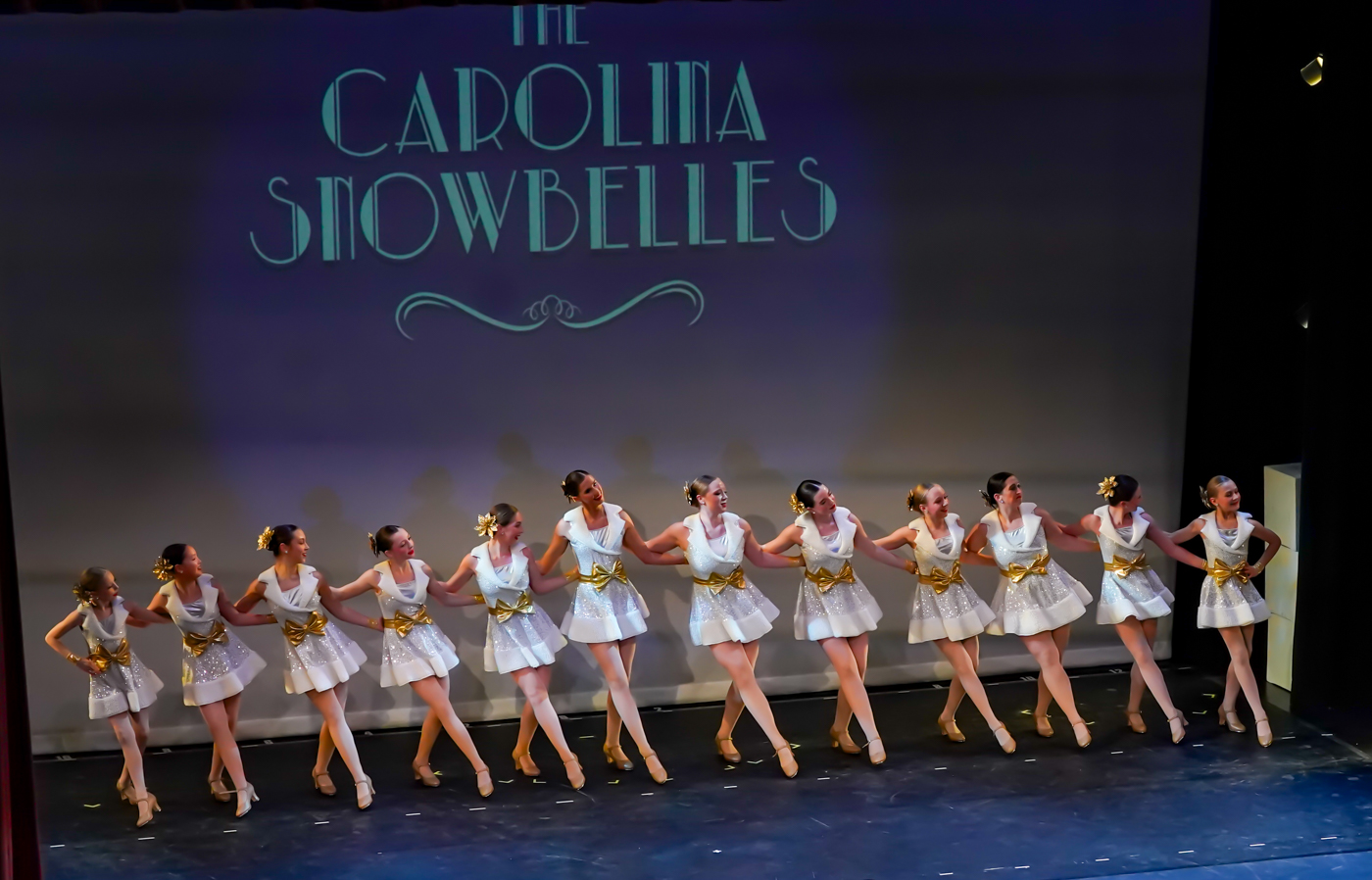
Few things beat a Snowbelles kick line! Photographic image by David Rogers for High Country Sports and Blowing Rock News
While the Lombardozzis’ vocal training is clearly on display throughout all of their performances, Gennard’s playful interactions with the youngest dancers are as endearing as they are entertaining in several of the numbers.
This year, 36 dancers performed in “A Carolina Snowbelle Christmas.” The number was special to Cutlip, since 36 Rockettes perform in New York City’s Radio City Music Hall and that legendary troupe is celebrating their 100th anniversary this year.
But with a new piece called,”Cascade,” Cutlip gave a nod to the Snowbelles’ Appalachian Mountains heritage, including music by the Lombardozzis as well as a brief clogging performance.
It all makes for a combination of beauty, wonder and poignant reminders of what the Christmas season is all about.
But enough of the text to read. Let’s look at the pictures!
BONUS PHOTOS: Click on any image for a larger image and to launch Slide Show Mode)
(All photographic images captured and processed by David Rogers for High Country Sports and Blowing Rock News)
By David Rogers. BOONE, N.C. — For 11 years now, the perfect “season opener” has been staged in the High Country and it has nothing to do with football or basketball at either App State or Watauga High School.
No, leave it to the Carolina Snowbelles and Project Dance to swoop in with the warmest kind of holiday cheer, beauty and precision athleticism.
“A Snowbelle Christmas” will once again grace the Appalachian Theatre stage in Boone. Because the 2024 shows were so popular, Project Dance show director Cheryl Cutlip announced on Nov. 25 that this year’s Christmas performance features an expanded schedule, including an 8 p.m. curtain on Dec. 5 (Friday); two Dec. 6 (Saturday) shows, at 1:30 p.m. and 5:30 p.m.; and two Dec. 7 (Sunday) shows at 1:30 p.m and 5:30 p.m.
“A lot of younger families have a hard time getting to the later evening shows, so we have moved things up a bit on Saturday and Sunday,” said Cutlip. “This is fun entertainment for the entire family, young and older alike. The shows are a great way to kick off the holiday season.”
This year’s performances feature some exceptional wrinkles, Cutlip explained, including vocal performances by Gennard and Christy Lombardozzi, as well as Chelsea Mudiam.
The Lombardozzis, said Cutlip, are accomplished professional vocalists, especially in the operatic style. Dr. Gennard Lobardozzi is a member of the faculty at App State’s Hayes School of Music, an associate professor of voice and the director of the Vocal Music Performance degree at the school. He established himself as a successful performer in opera, oratorio, and musical theatre repertoire and has been heard on stages throughout the U.S., Europe and Asia.
Christy Lombardozzi holds a Bachelor of Music degree from the University of Tennessee and is a graduate of the opera program at the Yale University School of Music. She has numerous operatic and theatrical roles to her credit.
Said Cutlip, “The Lombarozzis now have a child in the Snowbelles, Mabel, and she is one of our new Snow Flurries in the show. I knew her parents were incredible singers, so I asked if they would be in the show and they were gracious enough to volunteer. They are singing together and singing separately. Christy performs an opera that is oh, so beautiful. Gennard could do something similar but he is performing more standard tunes like ‘Winter Wonderland’ and ‘Santa Claus is Coming to Town,’ which will be loads of fun. They will be doing an opening number that is more of a Broadway-style piece. They will also be singing a new piece, called ‘Cascade.’ Gennard also accompanies himself with a mandolin.”
Photo courtesy of the Carolina Snowbelles and Project Dance
Beyond the special music and vocals, Cutlip reported that the 2025 Carolina Snowbelles troupe includes 36 dancers for the Christmas show, the largest performing group they have had in the 11 years of Christmas-themed shows, which began in 2014.
“The larger group allows us to do more, to share more. The ranges are more diverse, starting from six years old to adult,” said Cutlip.
But there is a symbolic significance to that number, 36, too, tied to Cutlip’s long history with the Radio City Music Hall Rockettes.
“This is the 100th anniversary of the Rockettes in New York City, which the Carolina Snowbelles are modeled after. There are 36 Rockettes on the stage at one time, so this is our nod to the Rockettes’ celebration this year,” said Cutlip.
Also new to the show is a piece called “Shine,” which Cutlip described as a very upbeat jazz number.
“In addition, There is a new piece called, ‘Cascade,’ which is a tribute to our heritage here in the Appalachian Mountains, to ‘Simple Gifts,’ which was later made famous as ‘Appalachian Spring’ that Martha Graham did as a more notable piece,” said Cutlip.
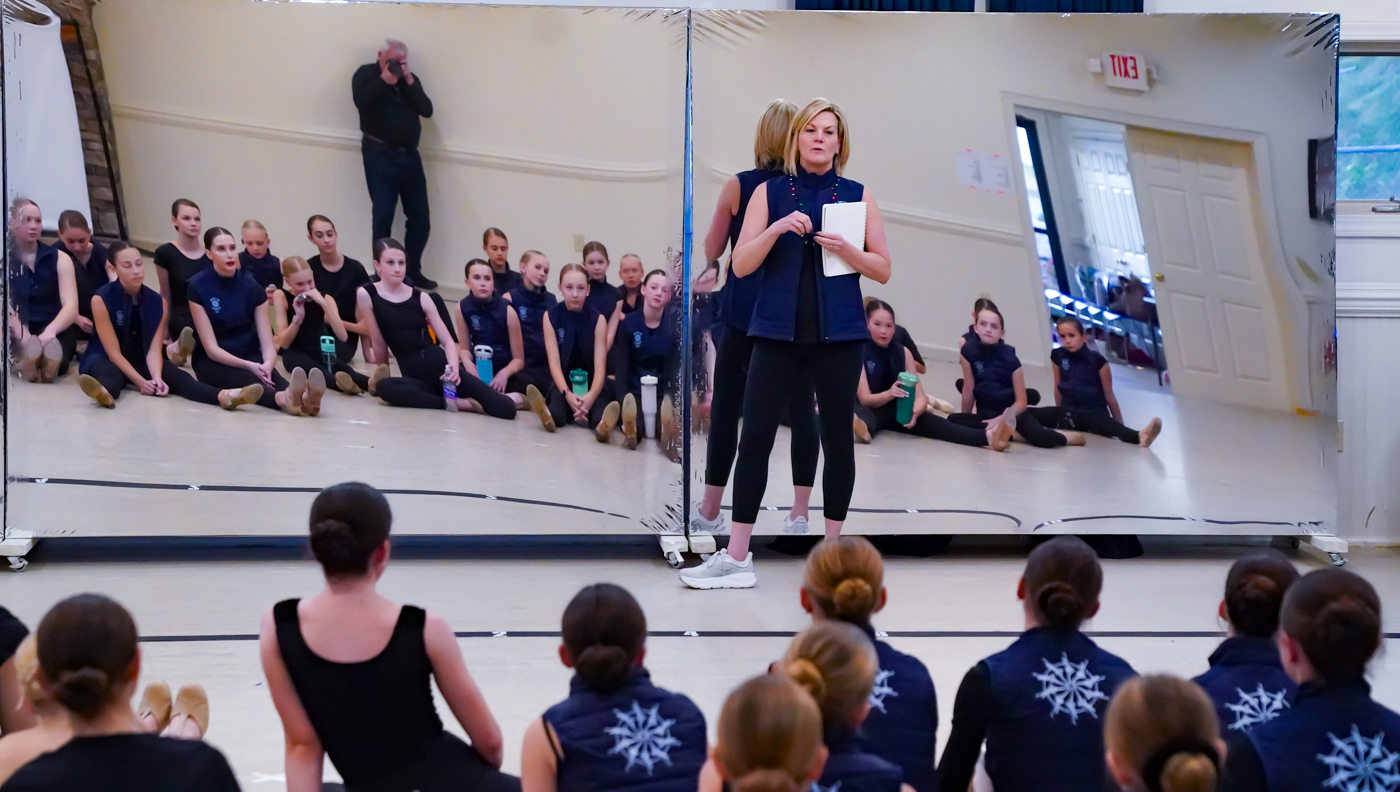
Cheryl Cutlip addresses the Carolina Snowbelles dance troupe during a November rehearsal for ‘A Snowbelles Christmas’, Dec. 5-7. Photographic image by David Rogers for High Country Sports and Blowing Rock News
“We are also embracing our heritage in the Appalachian Mountains by including a short clogging (piece), which opens to a stage for moving snowflakes in a Berkeley style piece, to the tune and lyrics of ‘Lord of the Dance.’ This is really my tribute to the beautiful and spiritual heritage that we have in the Appalachian Mountains. It represents faith, hope and love. The moving snowflakes give the dancers an opportunity to unite and move together for one idea. I am excited to share it, but there are a lot of moving parts.”
Part of the “Snowflakes” performance features a special visual opportunity for the audience as the Snowbelles will be creating a “snowflake” on stage with an overhead camera and a live feed projecting the images upstage for the audience, to see the intricacies of the movements.
“It was really fun to create something in the studio knowing that you have all these elements. I actually had my son, Evan, come to rehearsal recently and fly a drone overhead. He was able to get a pretty good shot so I could get an idea of what it looks like from above and how to clean it up before the live performance in the show,” said Cutlip. “It is important for us to make adjustments thinking about what the overhead view will be like. In a regular stage performance, the dancers in the front are seen more but with the overhead live feed, all of the dancers will be seen, equally. Most of the movements by the dancers are from sitting or laying down positions in this piece. It is intricate, but also very different compared to how you might see us in our kick lines, for example.”
Photo courtesy of the Carolina Snowbelles and Project Dance
There will be kick lines, of course, too, which are the Snowbelles’ trademark moves reflecting the Rockettes’ influence. Cutlip was with the Rockettes in New York for 15 years and has brought that level of professionalism to the Snowbelles
“Our focus is not just training the dancers to dance, but the whole person. We teach them not just what to expect, but what is expected of them, too. A number of our alumni have gone on to grace the stage not just at the college level, but professionally, too. Gracie Epperson is now a member of the Radio City Music Hall Rockettes. At 15, Journey Lockhart began getting contracts, including solo performances,” said Cutlip.
But the level of professionalism goes beyond the choreography and dance routines with the Snowbelles.
“Our lighting director for this year’s show comes all the way from Houston. Her name is Tiffany Schrepferman and I have worked with her before. She is terrific.”
Altogether, this year’s “Snowbelles Christmas” promises to again be fun and colorful, with an abundance of creativity in the hands and minds of the choreographers.
By David Rogers. BOONE, N.C. — If the 10 members of Boy Scouts Troop 109 didn’t understand the importance of preparedness before their adventure treks in New Mexico this summer, they know it now.
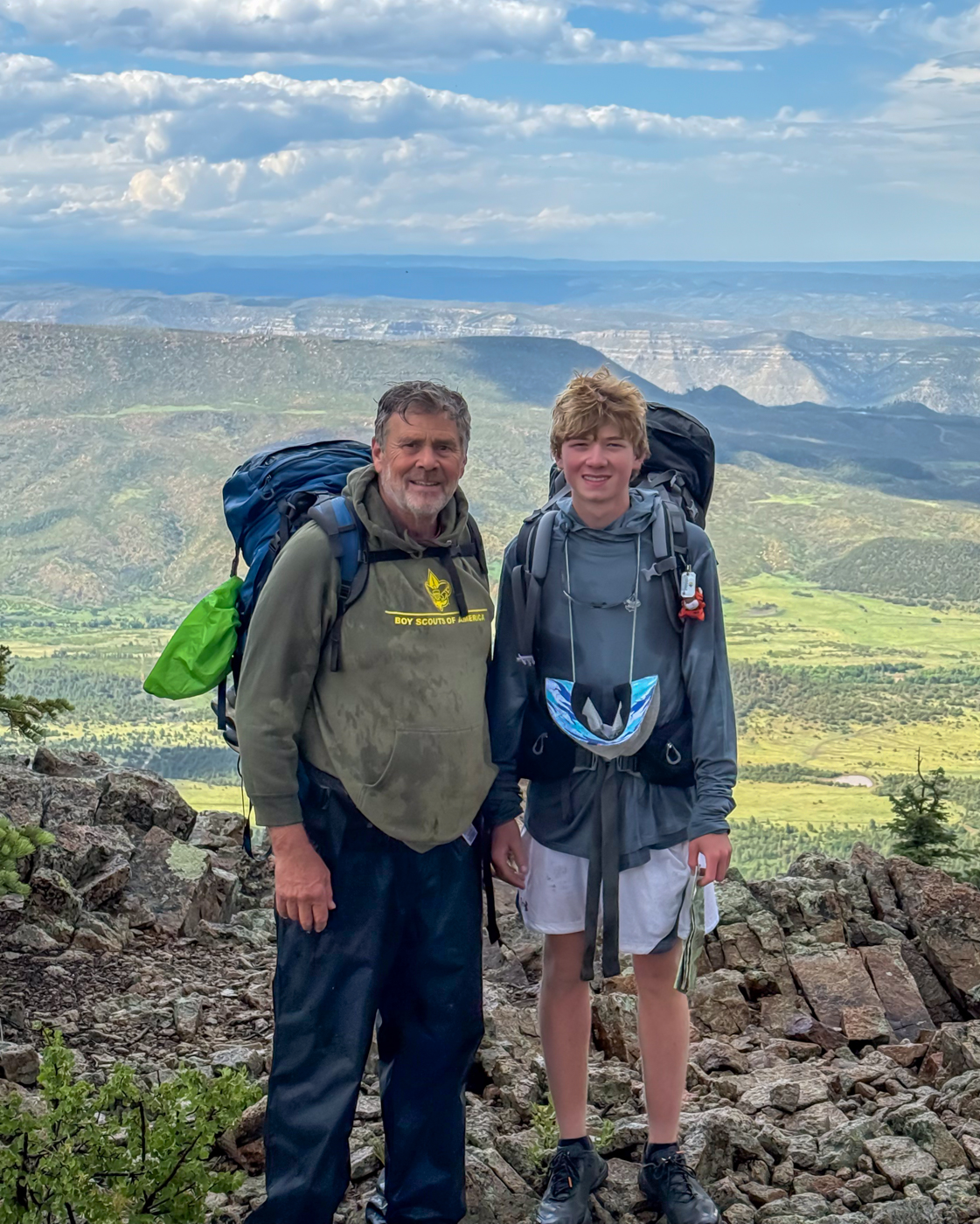
From setting up and breaking camp to surviving a “popup” lightning storm on top of a mountain — at an elevation above the timber line — the scouts and their six adult advisers had a trip to remember to the Philmont Scout Camp.
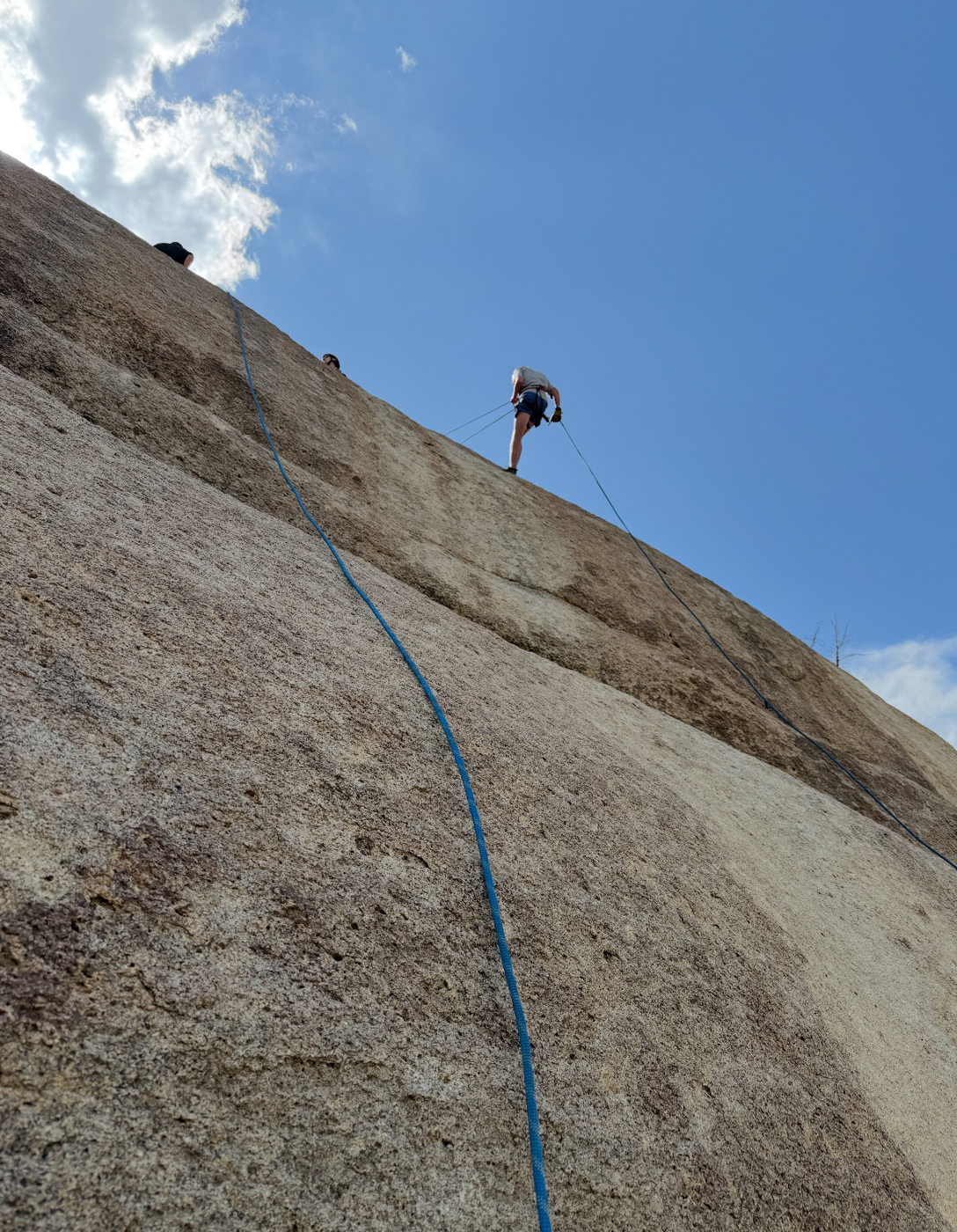
Rock climbing at Philmont. Photo submitted
Finishing a day’s hike and all but ready to turn in for the night, the boys hadn’t given a lot of thought to the process of setting up their campsite before the trip.
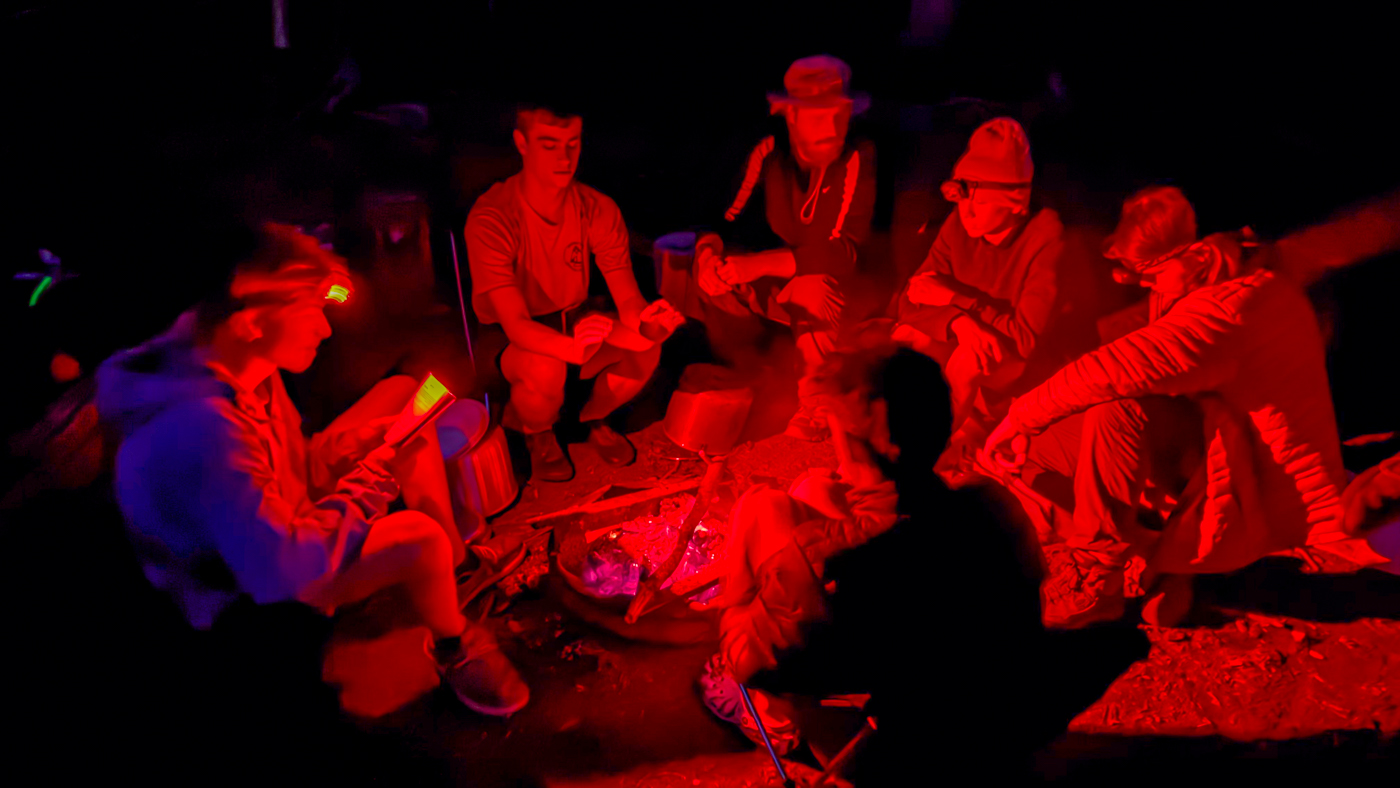
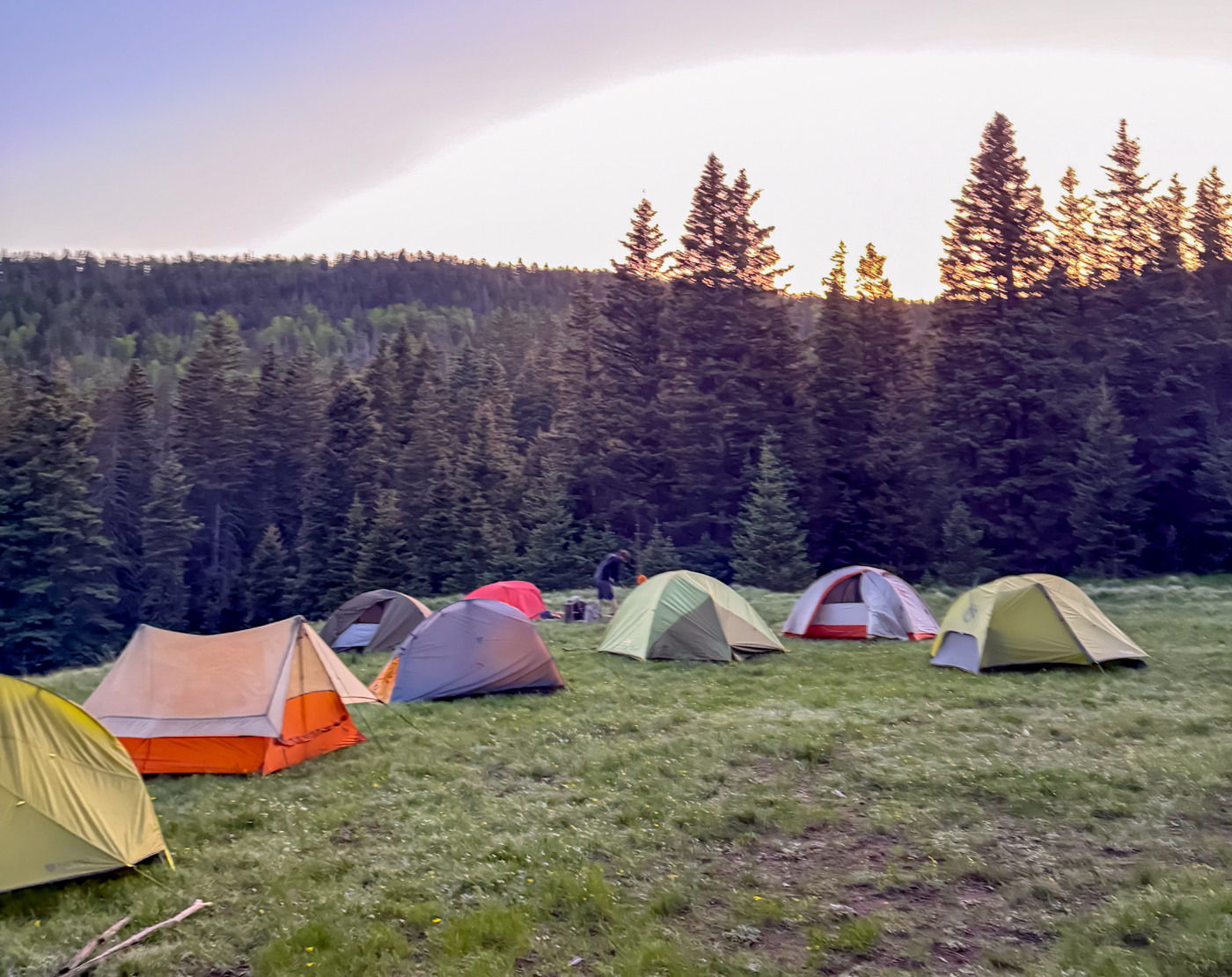
“At the beginning of the trek,” said Eagle Scout member of the troop, Evan Cutlip, “it took us about an hour and a half to set up camp at night. By the end, we had cut that in half, to 45 minutes.”
Different boys had different motivations for making the trip.
“I was in Cub Scouts from about 4th grade on,” said Jackson Hill. “Now I am being home schooled but taking a couple of elective course at Watauga High School, auto tech and welding. I have been in Boy Scouts for about three years. I am mostly in it for the activities. I had never been backpacking before, so Philmont seemed like a really good experience, one of those once in a lifetime things. So, I decided to give it a shot. Before the Philmont trip, we underwent wilderness survival training, which you are required to take.”
New Mexico was very different than the Southern Appalachian Mountains in which he has grown up.
“New Mexico is very dry compared to here,” said Jackson. “Big mountains and beautiful landscapes. It is very red.”
For Oliver Blain, Philmont added to his education because the learning was based on real world experiences rather than more abstract learning from reading a book.
“I’ve been in Scouting since I was 13, about four years,” said Blain. “In our Troop 109, Philmont has always been presented as an opportunity, typically in your older years of Scouting, so you are getting into more high adventure type of activities. I wouldn’t necessarily say that Philmont is life-changing, for me personally, but it was great. At Philmont, was necessary that you learn how to read a map. You have to know your way around and where you are trying to go the next day.”
At Philmont, preparedness is a also a necessity.
“All of us that attended Philmont this year already had a first aid merit badge,” said Blain. “Some of us had Emergency Preparedness merit badges but we were all required to take Wilderness First Aid training and to get certified.”
Wilderness first aid became potentially real for Blain and his fellow Scouts at Philmont.
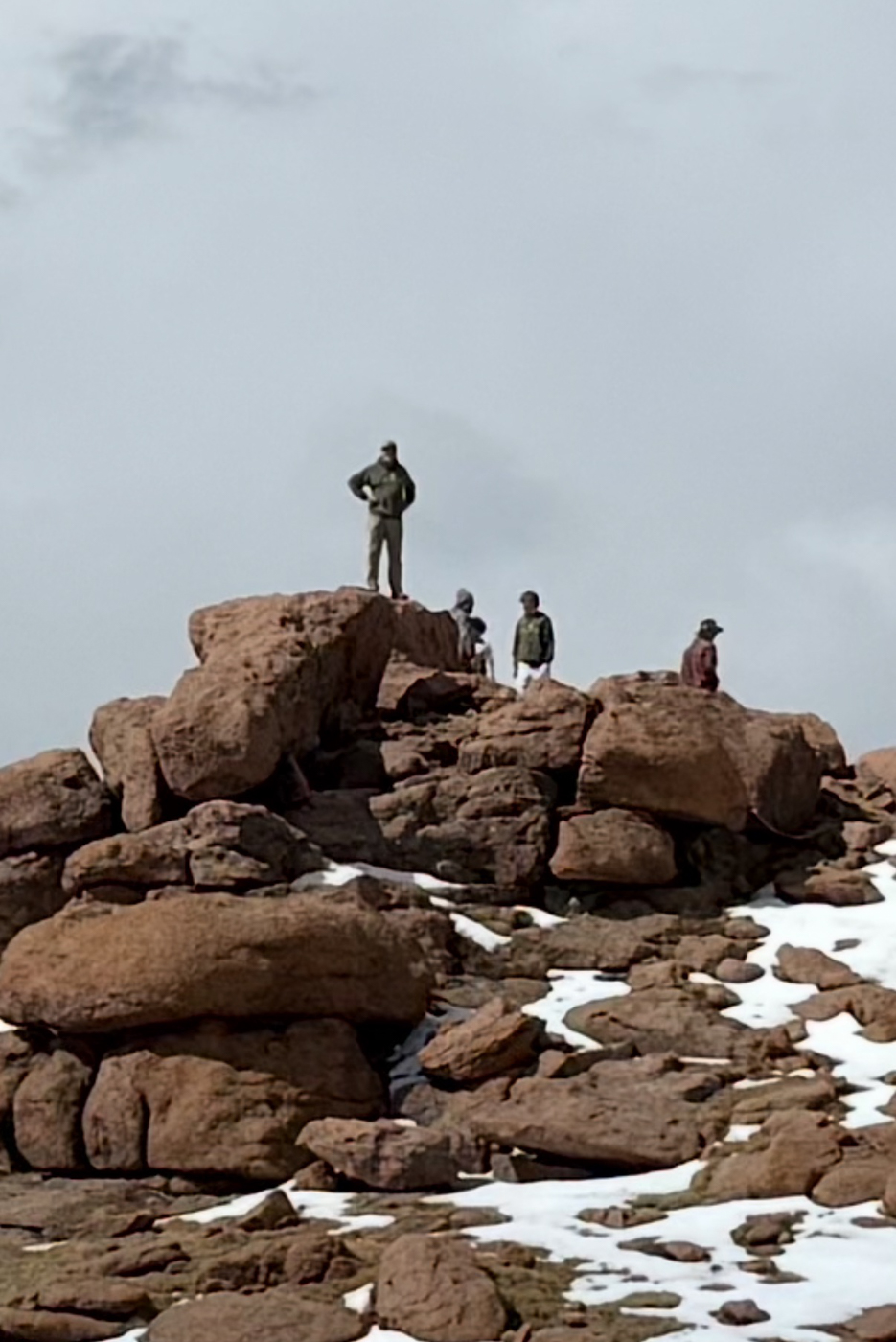
Boy Scouts Troop 109 made a side trip to Pikes Peak on their journey to Philmont in New Mexico. Photo submitted
“We got caught in a lightning storm on top of one of the most famous mountains, Tooth of Time, on our last full day. It is completely bald, just rock, above the timber line. We were split up into two crews. Our crew of five scouts and three advisers was a little bit slower going up. About three and a half hours in, we ran into the other crew, which had stopped about halfway up. There had been a lightning storm with pouring rain. They got to a certain height and decided it was too dangerous to go on.
“As a group, our crew decided to keep going up. We were on top and about 200 yards away a lightning bolt struck a tree. It was as pure white as a light bulb in your room. Mike Reynolds, my stepfather, was one of our advisers. He told us to immediately drop our packs and get to the north side of the mountain. That lightning bolt struck on the southeast side, so we headed to the north.”
Going north was important.
“On the south side, there was a really dense stand of trees. In a lightning storm, you don’t want to be near any trees,” said Blain. Conveniently, on the north side, there were giant boulders. It took us about 30 seconds to leave our packs and go over and down the north side. We helped each other find hiding spots among the boulders and that is where we stayed for about 30 minutes.”
Mike Reynolds, Blain’s stepfather and the Scouts’ advisor, had a little different perspective.
“There were two reasons to go to the north side,” said Reynolds. “First, there was a cliff on the south side and I didn’t want our boys running over the cliff. Plus, all the trees were on the south ridge. On the north slope, there were just those giant boulders they could get under. We didn’t want our guys to be the highest thing around. Also, the storm was coming from the south.”
Reynolds drew on years of experience, influenced by Scouting, but acknowledged that times have changed, too.
“I grew up in Scouting, near Danville, Virginia,” he said. “My father was a longtime scoutmaster. I got highly involved as a youth. Growing up as a Boy Scout, we went backpacking and camping a lot but it was a different time and era. If we wanted to go backpacking, we had parents who would drop us off on the Appalachian Trail on a Friday, without any adults, and pick us up on Sunday. Nowadays, that doesn’t happen. But the Scouting experience was an introduction to kayaking, backpacking, rock climbing, hunting, fishing… all of it. New Mexico is great. It is a wild neck of the woods.”
Just starting at Watauga High School as a freshman, Sam Cooke internalized the Philmont experience, almost academically.
“I just started 9th grade at Watauga High School. I want to take an academic path combining math and science, looking at some sort of engineering or biology career. The Philmont trip was amazing, definitely the best I have been on,” said Cooke. “There is the scenery, of course, but with the trek it is this feeling that you have just overcome a challenge. You look back and think, ‘Wow, we just hiked between 65 and 70 miles, total.’
“The lightning storm was crazy,” Cooke added. “We learned not to keep going higher in a lightning storm — even if you want to get to the campsite faster and get out of the rain.”
Cooke appreciated the relationship between adventure and some aspects of science.
“At Philmont, each day we hiked and most days when we stopped there would be a program, like rock climbing, white powder musket loading and shooting, archery, or making arrowheads. There was one day we were hiking to Cypress Mines. It was a slightly longer day, with about 39 creek crossings. The route was uphill on loose rock. I had not balanced my backpack, so the weight wasn’t evenly distributed. It was very painful. I got it adjusted that night and it was better for the rest of the trip,” said Cooke, with a grin. “The trip was so worth it. If you are in scouting, sign up for Philmont.”
Ron and Evan Cutlip had a father-son experience at Philmont with Boy Scouts Troop 109 in 2025. Photo submitted
Ron Cutlip, one of the adult advisors, was on his second trip to Philmont, but this time coming at it with a much broader depth of experience.
“I went to Philmont previously, when I was 16, in 1977. We were on the northern side of the Philmont camp back then. This time we were on the southern side. The park is large, over a hundred thousand acres,” said Cutlip.
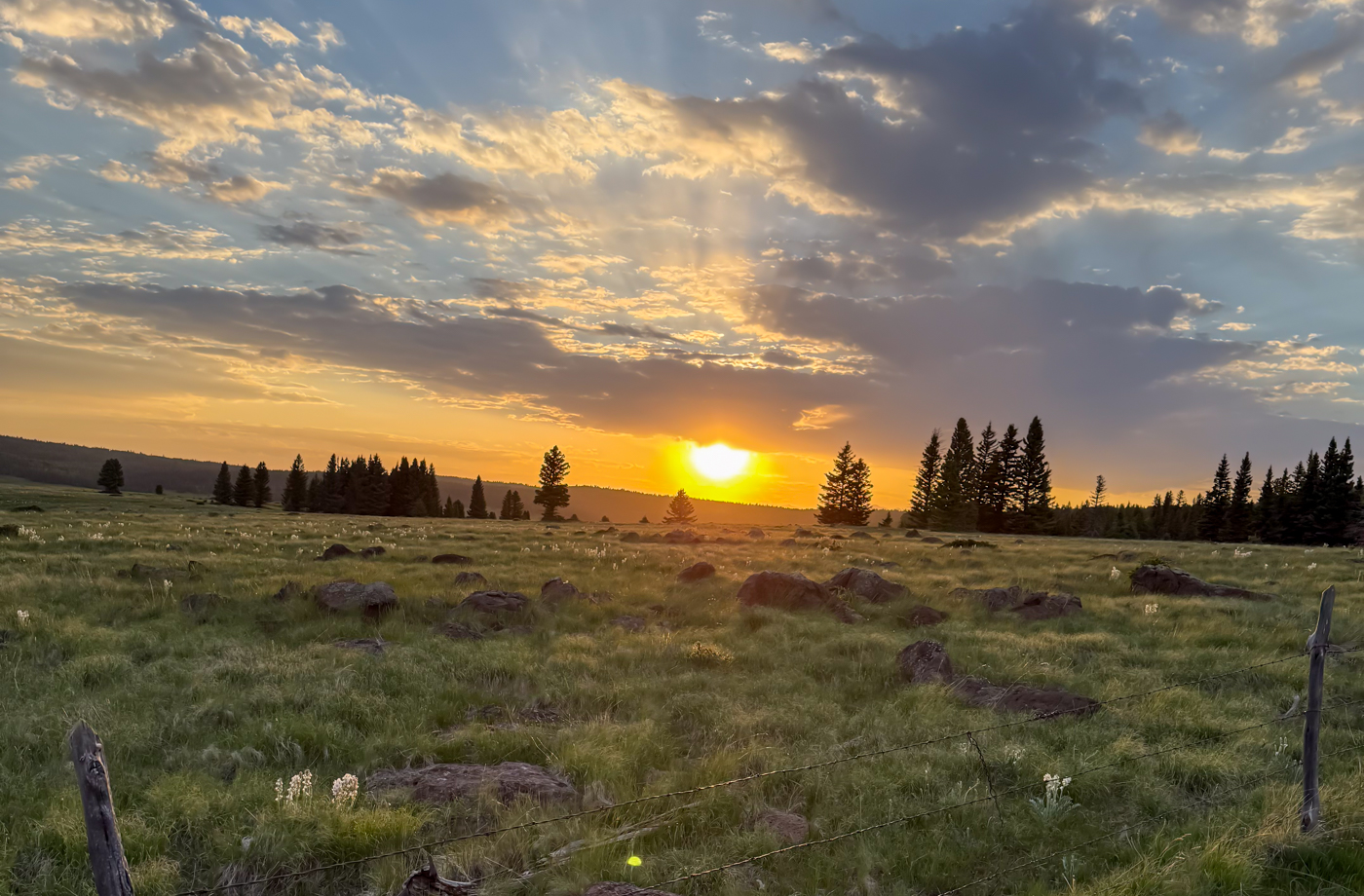
“Philmont is special,” said Cutlip. “It is an opportunity to really get deep inside yourself and see what you can accomplish. We had some incredible hikes up very steep terrain. There were mountain tops as high as 11,000 feet in elevation, or about twice as high as Grandfather Mountain, to put it into perspective. There were snow caps. We were able to see some beautiful sunrises and sunsets.
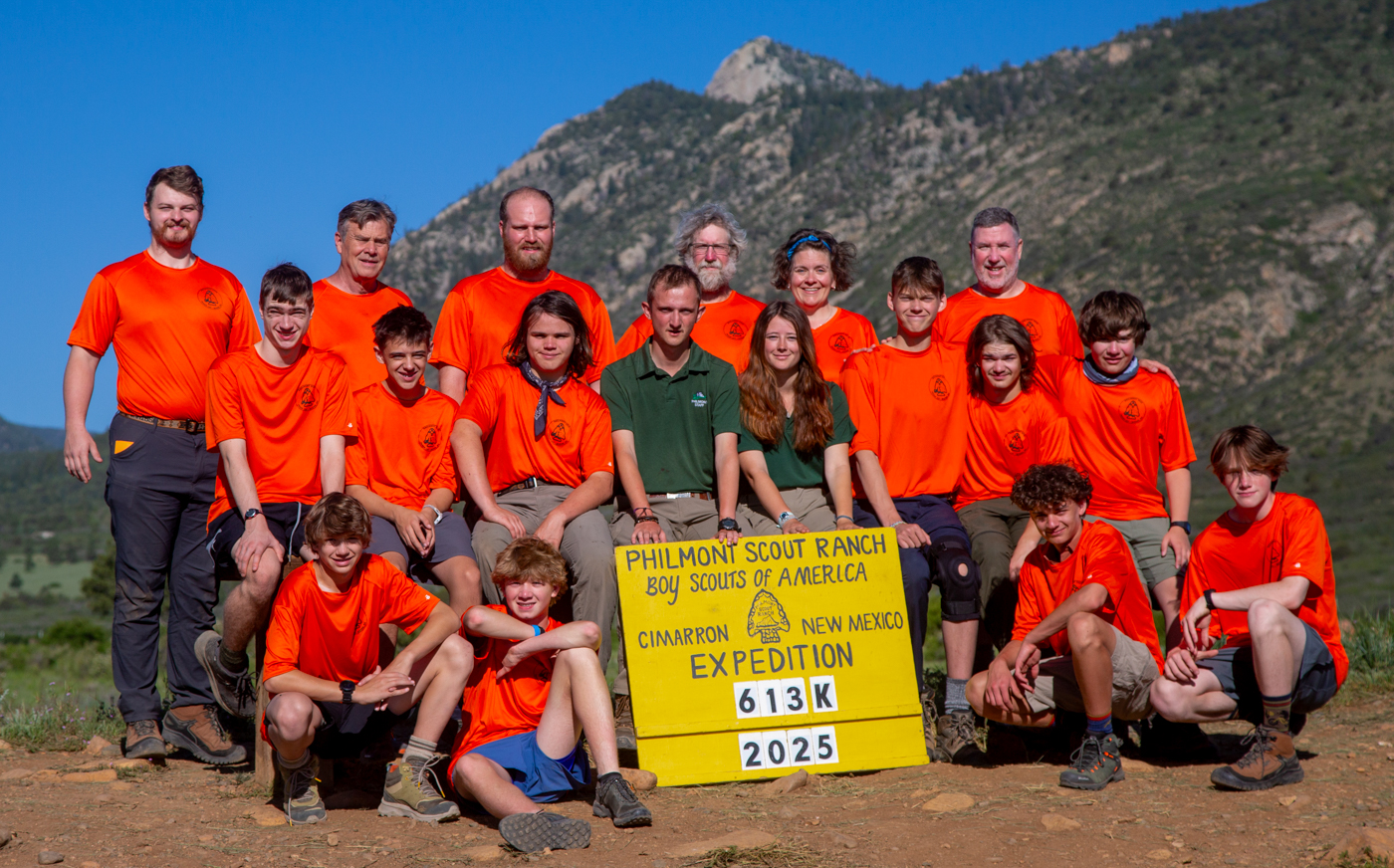
Boy Scouts Troop 109, at Philmont in June 2025. Photo submitted
“We did those kinds of things every day, for 12 days,” Cutlip recalled. “We carried our backpacks with supplies, personal gear, food and water. We hiked a minimum of 10 miles a day with the backpacks, then put in additional mileage after that going to different events or activities. There were talks on Indian lore. Being in nature, away from your cell phone and computer, as well as from the general stresses of life was absolutely incredible.”
For Cutlip, this trip to Philmont was a family adventure.
“I was with my son, Evan, who is now an Eagle Scout. In 1977, I went when I was 16 and now Evan has gone when he is 16. To be able to spend that time with him was very precious and valuable, as a father,” said Cutlip.
While the lightning storm was only two hours of the 12-day trip, it made an impression.
“The lightning storm was actually a hailstorm,” Cutlip recalled. “We knew it was coming. We could see it, miles away, making its way toward us. We prepared ourselves for it. It first came with rain, which became a major hailstorm. There were lightning strikes all around us and we implemented our lightning protocol, not going further up the mountain. We were soaking wet, waiting it out for two hours. We had to take precautions not to get hypothermia. All of us were close to that, so we had to do our best to keep warm. The temperature had dropped, dramatically, from the upper 80s when we started at the bottom, but when the storm hit, it was in the low 50s. We were soaking wet and there was a slight wind, which made it even chillier.”
Adversity comes with lessons and benefits.
“One of the real benefits of Scouting is learning to be a leader. Like with the hailstorm, a leader knows what to do and to reduce the potential dangers in the situation. He is prepared. The boys learned how to lead. They took turns cooking, cleaning up, and putting up bear bags. These are all not just life experiences, but also developing problem-solving skills — being prepared,” said Cutlip.
At the beginning, it took the Scouts about an hour and a half to set up camp, said Eagle Scout Evan Cutlip. By the end, they had cut that time in half. Photo submitted
For Evan Cutlip, the lessons from the Philmont trek will stay with him for a lifetime.
“Sure, it is being outdoors, and in nature,” he said. “But you learn to be less scared of things, of the unknown. You get connected with nature and you learn to be more trustworthy of your camping equipment. But it was also a real opportunity to work on team skills, working with people you never had to work with before, whether it was setting up camp, cooking, or cleaning up. We had a couple of pre-treks, but they were nothing like the real thing.
“It is really interesting to be out there for a bit. People react to situations differently. Tensions can build,” added the younger Cutlip, a junior at Watauga High School planning on maybe playing college tennis before pursuing a career in finance and business management.
The Boy Scout Troop 109 participants in the 2025 Philmont trip were Sam Cooke, Oliver Blain, Jackson Hill, Nathaniel Walker, Evan Cutlip, James Pressly, Burlie Freeman, Daniel Wood, Dillon Miller and Brayden Hughes.
The adult advisors included Mike Reynolds, Ron Cutlip, Will Indicott, Justin Ginn, Tim Walker and Candis Walker.
Sunrise or sunset, Philmont 2025 was a ‘once in a lifetime’ experience for Troop 109. Photo submitted
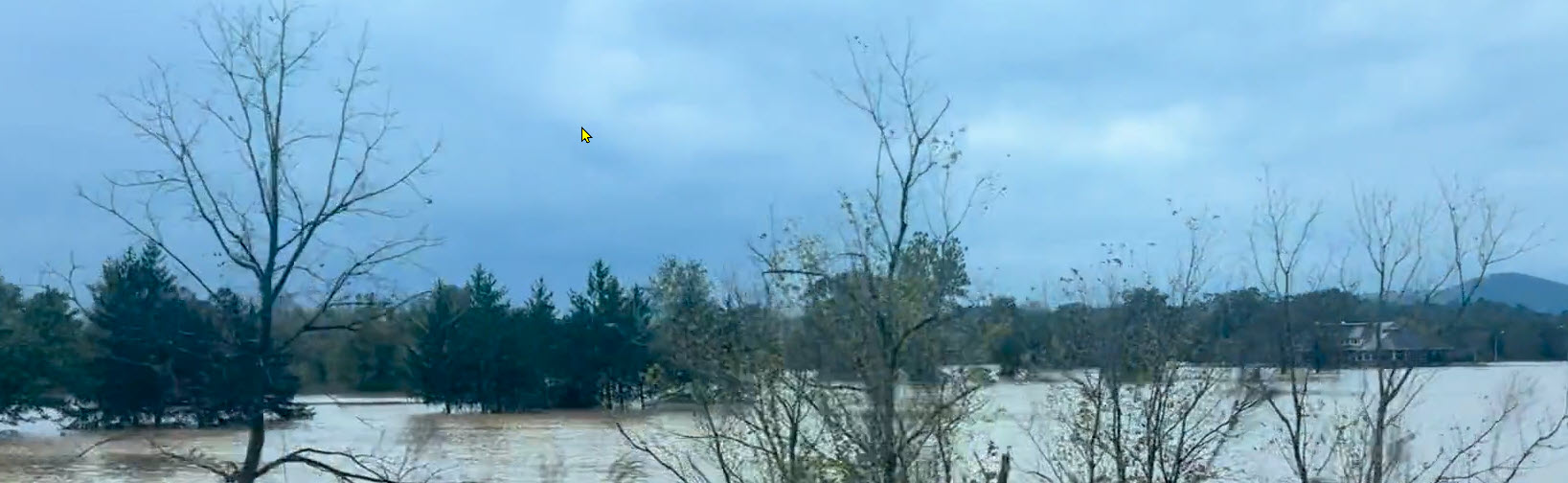
By David Rogers. GREENSBORO, N.C. — For all intents and purposes, Hurricane Helene took a “wrecking ball” to the front nine holes of the Asheville Municipal Golf Course last September. When you consider the lives lost and estimates of $59 billion in damages from the storm across all of North Carolina, it is easy to dismiss the carnage at Asheville MUNI as just one among hundreds of similar stories.
That would be a mistake. The demonstrated community passion for the iconic recreational venue that turns 100 years old in 2027 is undeniable, as is its role as an economic engine for the Asheville region.
ASheville MUNI golf course was under water after Hurricane Helene swept through on Sept. 26-27, 2024. Photo submitted.
There is even an overlapping connection to the High Country: Boone and Blowing Rock-based, professional golf course architect Ron Cutlip was announced in late July as being awarded the restoration design contract and will collaborate with Mike Bennett, a partner with Williamsburg, Va.- based Commonwealth Golf Partners in leading the project.
“We are the operating management company for Asheville MUNI on behalf of the city,” explained Bennett in an interview with High Country Sports at The Wyndham Championship, the recent PGA Tour event, on Aug. 3 at Sedgefield Country Club.
“Two days before the storm,” Bennett recalled, “I was on the MUNI course with Brad Becken, the head of the Pinehurst-based Donald Ross Society. We were reviewing the course because they had given us grant money for some earlier planned restoration work. As we were going around the course, it started raining and there was a forecast for more precipitation in the next 24 hours. I drove back home to Williamsburg but the next day our superintendent in Asheville called and told me those rain showers were going to be a lot more than anyone thought. They were calling for mass flooding. That’s when we realized it might be pretty bad for our course.”
Collectively, we said, ‘No, we are going to rebuild it.’
Hurricane Helene arrived the night of Thursday, Sept. 26, 2024. Bennett said the flooding crested the next afternoon.
“Then I arrived on Monday to survey the damage and, frankly, it was beyond anyone’s imagination. Someone jokingly suggested the property could be used for a BMX motocross venue, but collectively we said, ‘No, we are going to rebuild it.’”
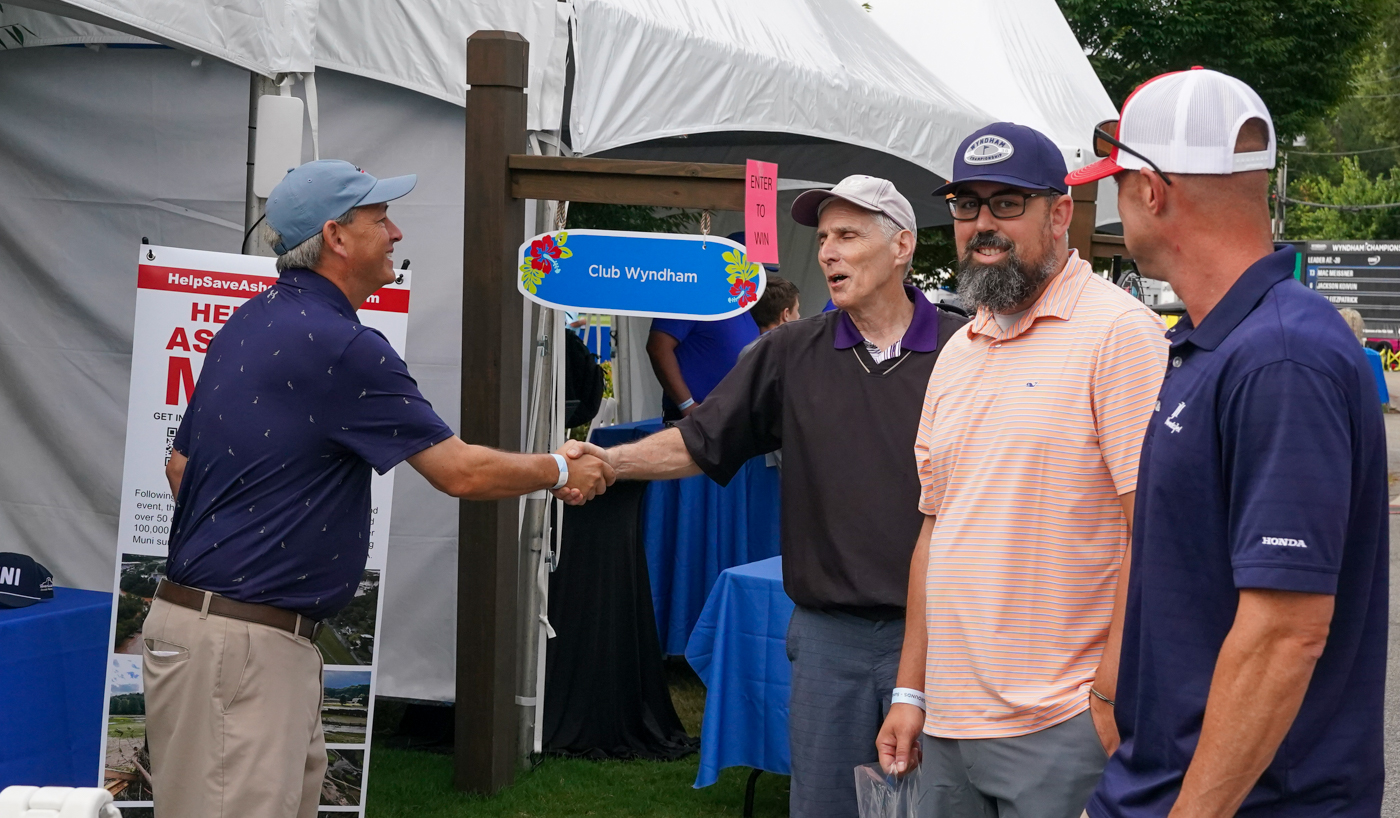
Chris Smith (left), President of the Asheville Buncombe Sports Commission, greets one of the Wyndham Championship tournament patrons on Aug. 3. Photographic image by David Rogers for High Country Sports
Bennett said he was on the selection committee for awarding the restoration’s design contract.
“We are super excited about hiring Ron,” said Bennett. “The MUNI golf course was the first RFQ (request for qualification) posted by the City of Asheville. That is testament to how important this was for the city, but also to all the efforts by our group to get everything ready. When you consider all the destruction of buildings and property in the area, it is quite an honor to be the first posted RFQ.
This isn’t just a design project. There is a mitigation and resiliency component, too.
“A large number of professional golf course architects responded to the RFQ,” Bennett added. “At the end of the day, what won it for the Cutlip team is their experience in Donald Ross course restoration. In their presentation, they talked about all the items that are going to be important and specific to this project. For example, Ron has a proprietary bunker drainage system that will help us reduce any future flooding. They really seemed to understand the scope, that it wasn’t just a design project. There is a mitigation and resiliency component, too.”
Representing the Asheville MUNI recovery effort at The Wyndham Championship were Cutlip; Bennett; Chris Smith, President of the Asheville Buncombe Sports Commission; Nate Smith, responsible for social media and marketing for the course; and Pat Warren, the on-site Commonwealth Golf Partners manager and golf pro at the MUNI course.
In talking with members of the Asheville team at The Wyndham Championship, that word, “resilient,” was a common descriptor of the course, the area and the people.
People pulled out their chainsaws. Complete strangers worked together. People of different political ideologies came together as neighbors.
Nate Smith articulated a broader perspective about the recovery efforts.
“Hurricane Helene is the worst thing to ever occur in western North Carolina, by far,” he said. “Personally, I lost a house and a car. I know people who lost family members in the storm. Even almost a year later, the devastation is still easy to see. There are unavoidable scenes throughout the city. You see mountainsides with hundreds of trees blown over, still. You see washed out roads. You see places where there once was a 6-inch deep creek that became a 25-feet high torrent of a river.
“But I am really proud of our community,” Smith added. “The resiliency, how we all came together to keep people’s spirits up. We didn’t have water. We didn’t have electricity. We didn’t have shelter. We certainly weren’t feeling safe. But people pulled out their chainsaws. Complete strangers worked together. People from different political ideologies came together as good neighbors. Those are things I will always remember about that storm well beyond the tragic circumstances.”
Help Arrives
Organizers of The Wyndham Championship in Greensboro — almost 170 miles away from the Asheville course — responded, generously. With a strong connection through golf and personal histories, they made Asheville MUNI’s restoration a beneficiary of fundraising efforts. Everywhere you turned during the Wyndham tournament, there was a volunteer hawking 50/50 raffle tickets. Asheville’s recovery team was given a premium sponsor tent location to tell the restoration story and receive donations.
“A fellow by the name of Mark Brazil is the reason we are here at The Wyndham Championship,” said Chris Smith, the Asheville Sports Commission president. “Mark is Chief Executive Officer of The Wyndham. He is a native of Asheville and grew up in Biltmore Forest. Obviously, Mark knew what happened to his former hometown with Hurricane Helene. He is the one who presented us with this opportunity. We receive proceeds from the 5K, from the concert the other night and a portion of the 50/50 raffle, as well as anything we can raise here at the booth. And it has proven to be a terrific opportunity. We have had an abundance of dumb luck, establishing contact with some of the professional golfers and their families, many looking to help through their foundations.
“While Mark Brazil gets the lion’s share of credit for us being here, a guy by the name of Rob Goodman has also been instrumental in our success this week,” added Smith. “Rob is an Asheville native and The Wyndham Championship media director. The last few days, he kept me busy doing interviews with radio and TV stations.”
Image capture courtesy of Asheville MUNI restoration project video, courtesy of Friends of Asheville MUNI.
Getting The Job
These are heady times for Boone and Blowing Rock’s Cutlip, who last year was inducted into the prestigious American Society of Golf Course Architects. Donald Ross was one of the 14 founding fathers of ASGCA, so having a chance to work on one of Ross’ courses like Asheville MUNI is special, exciting and humbling, he admitted.
“This is such an honor,” acknowledged Cutlip. “The course we are standing on, Sedgefield, is a Donald Ross designed course, just like Asheville MUNI. Both were built in the mid-1920s. Keep in mind I will not be designing the course because that was done by Ross a hundred years ago. Working from preserved copies of his original plans, we will be restoring the front nine to its original greens, fairways and tee boxes. I am part of a team, including Biohabitats and Forse Design.”
Hurricane Helene came in like a lion…
Chris Smith grew up playing golf at MUNI and has vivid memories of the course where he learned to play the game.
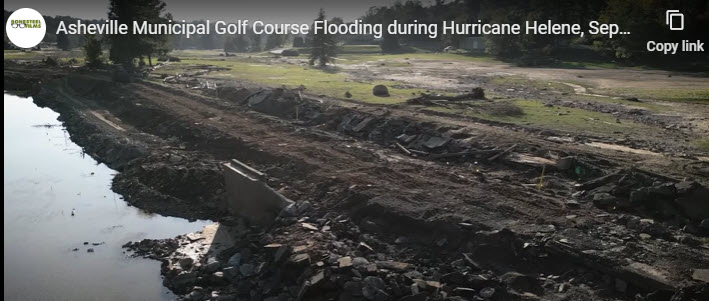
“Asheville MUNI is an historic course, beloved by people all across the state but especially those who grew up in or are now living in western North Carolina,” explained Smith. “Now the front nine is unrecognizable. A lot of rain over two days before the storm saturated the ground. Then the 10-20 inches of rain the storm brought to the region was not just what fell on the course but the water from the surrounding higher areas flowed down to and through the lower areas, too, and then you had the overflowing banks of the Swannanoa River. It was a flash flood of gigantic proportions, uprooting trees, sweeping away structures and even dislodging concrete and pavement. What were once pure, smooth greens and lush fairways are now disaster areas.”
Smith estimated that the restoration will cost about $12 million.
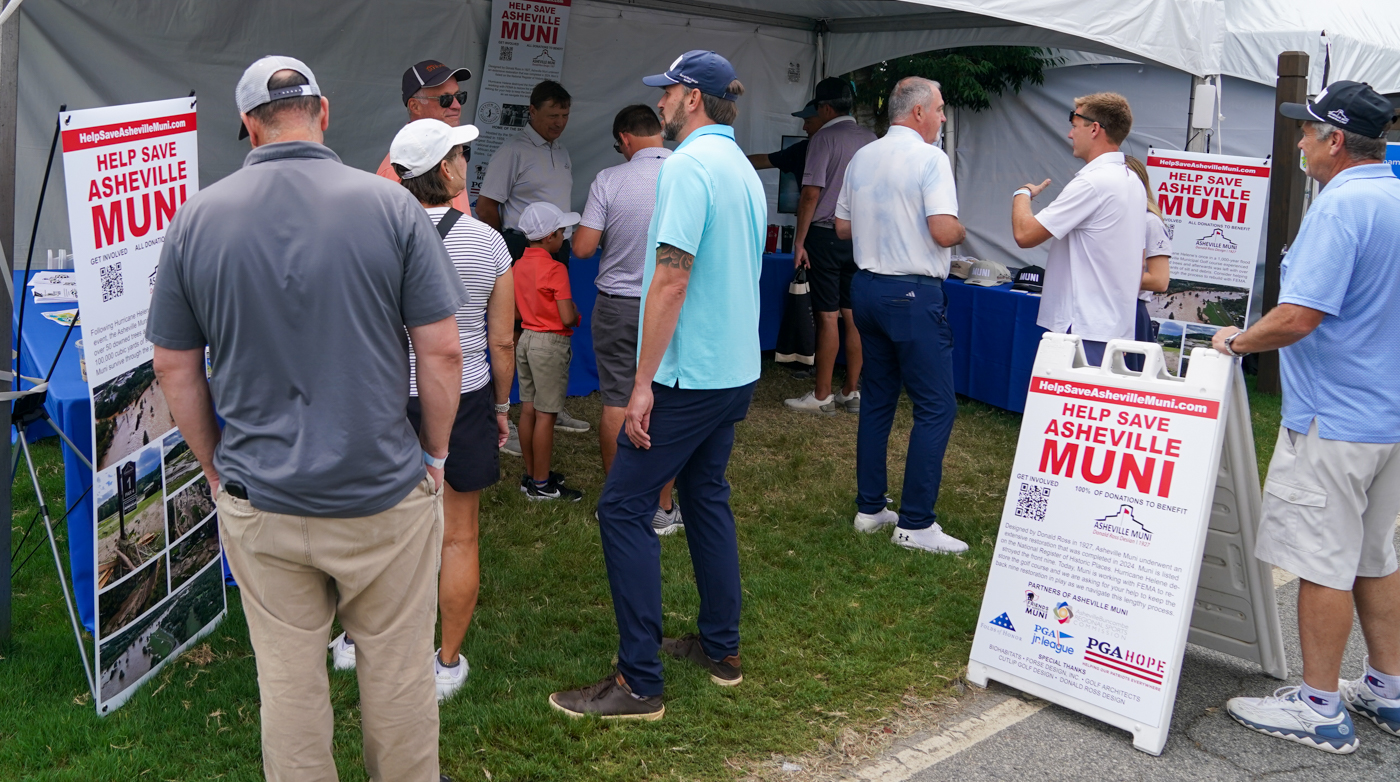
“FEMA has taken an interest in the project and we are told will contribute a good part of the restoration costs,” said Smith. “But the entire community has gotten behind the fundraising efforts, too, including the city and so many individuals for whom the course is special. This weekend, we’ve had a steady stream of Wyndham Championship patrons stopping by and giving whatever they can spare, from $1 to $100. Every dollar helps and we appreciate the support.”
The better job we do and the faster we can get it done, the better off we will all be.
After the Hurricane Helene waters receded, Asheville MUNI was left with extensive debris and damage, including scars from necessary rescue efforts. Image capture from Friends of Asheville video.
Cutlip estimated the restoration project will require about 18 months to finish, assuming all goes well and, of course, the weather cooperates. He said it may be six months before any actual work can get started as they obtain the necessary state and local permits, he said.
For a course that sees some 41,000 rounds of golf played on it, annually, to have the front nine sitting idle for an extended period could be catastrophic, financially. The estimated six months to wait for the permitting process to run its course complicates the matter, too — but with opportunity.
At The Wyndham Championship, there was enthusiastic interest among visiting tournament patrons, young and older, about Asheville MUNI’s recoverh efforts. Photographic image by David Rogers for High Country Sports
“Hurricane Helene came in like a lion,” said Pat Warren, Asheville MUNI’s head golf pro. “It was quite catastrophic, ripping up greens and fairways, as well as bringing a lot of debris onto the course. We have set up a disc golf course on that part of the property, to monetize it during the permitting process. The disc golf baskets cost about $18,000, and once we obtain all of the permits to begin the restoration, those baskets can easily be moved and used at another location.”
In talking with the group, one thing became clear: the people restoring Asheville MUNI are here to stay.
“When a natural disaster like this happens, it is not uncommon for those affected or even literally uprooted to move away,” said Nate Smith. “I get it. But I am a native of Asheville. I grew up here. I am now a realtor in Asheville. My family is in Asheville and Asheville is my home, the place where I want to raise my kids. We are super plugged into the community. As long as I live in America, I will live in Asheville.
“Specific to this project, I think part of the appeal is the rise in interest among golfers to bring back Donald Ross designs in golf courses. It is a super cool phenomenon,” Smith added. “For the Asheville MUNI golf course, it is an absolutely amazing thing to do because people are hungry for it. The better job we can do and the faster we can get it done, we are all going to be better off. How can you beat a classic Donald Ross golf course that is five minutes from downtown Asheville and with long-range mountain views? It has an incredible history, not just as North Carolina’s first public golf course, but as the first golf course to integrate in the South. It has the longest-running, African American-run golf tournament in the world with the Skyview event every year.”
Waxing philosophical, Smith said, “The MUNI course is such a community center. What makes America really wonderful is the coming together of different groups of people for a common goal. That happens at Asheville MUNI every day. All sorts of different folks are there, playing, meeting one another and having a good time playing golf.”
By David Rogers. BLOWING ROCK, N.C. — Ignorance is bliss… Well, at least we should be able to laugh at ourselves.
Growing up in the foothills north of Oildale, Calif., my family literally lived in the oilfields about 10 miles out of town. About a half-mile from my high school was Bakersfield Speedway. It was a dirt track and clouds of dust would pour into the lighted skies above it just about every weekend.
As a snotty-nosed, ragtag kid from the oilfields but with a yearning ambition for something more than my upbringing offered, I never went to a race at the track but I got close enough to know I didn’t want any part of it. With cigarettes dangling out of their mouths, the beer-guzzlin’, cussin’ and swearin’ rednecks wearing “wife beater” T-shirts were not the crowd I wanted to be a part of. I expect there were a lot of nice folks, looking back, but my impressions of that stock car racing crowd… well, it wasn’t something I wanted to be a part of.
And I carried that bias all the way through college and into young adulthood. When Bakersfield’s Rick Mears was winning the Indianapolis 500, I became a fan of open-wheel, Indy Car-type racing. It seemed somewhat more refined than the guys from 1960s NASCAR and stock car racing that you saw on television and the local dirt track. I got little thrill from “tradin’ paint.”
He explained the sport had changed a lot over the years.
In June of 1997, I was living and working in Newport Beach, Calif., doing stock market research. I focused on small and micro cap companies, usually with little in the way of institutional ownership but with an emerging story that might soon catch the attention of the big money managers. One of the companies I was looking at was a small outfit called Kaiser Ventures, which had been created to redevelop the land east of Los Angeles where Kaiser Steel Mills operated, previously. Kaiser Steel had gone bankrupt and Kaiser Ventures was charged with reclaiming and redeveloping the property, ridding it of any environmental concerns and hazardous wastes while repurposing it for profitable enterprises.
Included in the redevelopment was the sale of a little more than 500 acres to Penske Motorsports for the development and construction of the California Speedway. When the transaction was completed, Kaiser Ventures owned an equity stake in Penske and Penske owned stock in Kaiser Ventures.
Curious as to how the whole site (roughly 1,800 acres) was being redeveloped, including the California Speedway for about a third of it, I decided to attend Kaiser Venture’s annual shareholder meeting on Friday, June 22, 1997.
I won’t bore you with all the business-related gobbledy-gook, but during breakfast at the early morning meeting in Fontana, Calif., I met Greg Penske, the president of Penske Motorsports and the son of Roger Penske. I shared with Greg both my attraction to open wheel racing and the connection to Rick Mears, as well as my skepticism of any virtues in stock car racing.
Now and then, you just have to be willing to laugh at yourself.
He understood my early impressions of stock car racing but added the sport had changed a lot over the years. In fact, he said, the inaugural California 500 was being held that weekend and later that same morning was pole qualifying for the Cup Series race — and invited me to be his guest at the track for the qualifying session. He threw out a few names, like Jeff Gordon, who would be making qualifying runs, as if I knew who those people were.
Initially, I declined, saying I had too much work to do back in Newport Beach, but he was persuasive and soon we jumped on a shuttle to the track.
Now you have to remember that I was pretty naive about stock car racing at the time. I knew nothing about the sport and its players. I knew even less about its popularity. In fact, up to that point I could care less.
As we rode along, approaching the track, I wondered aloud if there was an RV manufacturing plant close by because there were these huge lots where RVs were parked, shoulder to shoulder. “No,” I was told, “those are all here for the races this weekend.”
A little further, I saw parking lots full of cars. Being not too slow on the upbeat I said, “And next you are going to tell me that all of those cars are people going to the race, too.”
“Yes,” came the reply.
About that time we drove under the outside perimeter of the Speedway and under the track, emerging at the west end of the garage area. Looking up to the main grandstands on our right, I saw a packed crowd numbering over 100,000 — and this was on a Friday morning for pole qualifying in Southern California! This wasn’t Charlotte, Daytona or Bristol. It was a suburb 50 miles west of Los Angeles!
As we rumbled along, I looked to my left and saw big trucks (haulers for the cars and teams), all shiny and wrapped to display all of the major brands of sponsors, including Budweiser, Dupont, Texaco, Coors, John Deere… more than 40 of them, all lined up. And there wasn’t a cigarette-chompin’, beer-guzzlin’ fella to be found! Obviously, there was serious money invested in this sport and the proverbial light bulbs were starting to get turned on in my head.
Exiting the shuttle and entering the garage, Greg and I started walking down a long corridor between the various car stalls. They seemed mostly empty, but we walked directly to the center of the facility. There, we walked up to a group of four guys in overalls (mechanic suits, I guessed) stood in conversation.
As we approached, Greg greeted the fellows enthusiastically, and introduced me. “This is my new friend, David,” he said to the guys, one by one introducing them as Roger, Dale, Dale and Rusty. I extended my hand to each one and then asked, “Which cars are you guys mechanics for?”
Remember what I said about ignorance? I guess the same could be said about innocence, too, like, “… from the mouth of babes,” as the saying goes.
With the muffled roar of stock car engines just outside the building, I didn’t understand why these five guys’ laughter echoed so loudly off the inside walls of the building.
At least not until I learned the identities of the men in mechanic suits: Roger Penske, Dale Earnhardt, Dale Jarrett and Rusty Wallace.
Now and then, I still have a good laugh at myself.
By David Rogers. BLOWING ROCK, N.C. — Back in 1976, I was finishing up an undergraduate degree and some graduate studies at California State University, Bakersfield. One day, at lunch in the student union, I inserted myself into a conversation between two professors and asked a few relevant questions. And, just that quickly, I was hired as the replacement business manager of the school’s fledgling student newspaper. They promptly fired the guy they had, even after I said I would only take the job if I could do it my way.
It was one of those “What have you gotten yourself into?” moments. The Runner was a 4-page tabloid, being published once a month — and losing $750 every issue.
A rampant imagination filled my head with ideas on how to help the game gain popularity in the U.S.
All of the content was created free by the journalism students. All of the stories were converted to phototypesetting strips of text created by the Chancellor’s office, as a freebie for the journalism department. And the paper was laid out by unpaid students on pasteboards (Pre-printing processes were all manual. Desktop publishing was still future-think).
It didn’t take me long to figure out the losses stemmed from having a few thousand copies of The Runner printed by an outside company.
Well, within three months we were publishing a 24-32 page newspaper, twice a month, and earning a $3,000 profit for the school each edition… but that might be fodder for a different story.
A Private Office and Other Ambitions
This story is about leveraging resources. As the business manager of the student newspaper, I was given an office in the faculty towers, a desk, a file cabinet and, most importantly, a WATS telephone line.
Cellular phones were still in some inventor’s imagination. The world was tied together by land lines. A WATS line (Wide Area Telephone Service) was offered by AT&T to U.S. businesses, including universities, allowing them to make large volumes of long-distance calls at a flat monthly rate. So in my case, the college was picking up the tab.
For a wide-eyed, 24-year-old nobody from Bakersfield, it was all pretty surreal.
Sure, I used the WATS line to sell a bunch of advertising for the newspaper, but I also had a passion for what in those days was the emerging, but still under-the-radar sport of rugby football. Now with resources, a rampant imagination filled my head with ideas on how to help the game gain popularity in the U.S.
One of my early phone calls was to Roone Arledge, Jr., the President of ABC Sports from 1968 to 1986. He was a critical player in ABC’s rise as a competitor in network television. Think “Wide World of Sports,” and “the agony and the ecstasy” of athletic competition.
Arledge was in a meeting when I called, but he returned it the next day and courteously listened to my pitch. Not interested. Not a big enough audience, he said, discounting the fact that it was the second or third most popular sport, globally, behind another just-emerging sport in the U.S., soccer, and the U.S.-born basketball.
Undeterred, in late February 1976, I called NBC’s The Tonight Show with Johnny Carson, in Burbank, Calif. I was put through to talent coordinator Howard Papush. After a brief introduction, Papush said he was intrigued and asked me come to the studio the next day.
So, I did. It was a commute of about two and a half hours, each way, from Bakersfield to Burbank back then, so not a casual undertaking. I arrived to the NBC studios only to find that Papush had called in sick that day. Disappointed, I turned around and spent another tankful of gas going back to Bakersfield, empty-handed.
Giving It A Second Chance
But Papush called me the next day, profusely apologizing. He asked me to come back the following day. To be honest, I was a bit apprehensive, but I said, “OK.”
After several cups of coffee on the early morning’s long drive down to Burbank, I arrived at his office for the 9 am meeting. Papush greeted me with, “Nice to meet you. I have 15 minutes.”
After driving seven and a half hours, counting the first trip down and back, and paying for a few tanks of gas on a starving college student’s budget, you can imagine my dismay at the “15 minutes” constraint — and the clock was ticking.
But I rallied to become my most engaging self, I guess, because an hour and a half later, Howard punched a button on his telephone intercom and told his secretary to cancel all the rest of his calls and meetings for the day. He took me on a tour of the studio, bought lunch, introduced me to some studio executives, as well as a few behind-the-scenes folks.
Come mid-afternoon, he explained that he had to get ready for that night’s taping of The Tonight Show, asking if I would like to stay and see the show. At first, I said no, because I had a paper to complete back at school. But I changed my mind when he said, “Johnny is coming out tonight, riding a donkey and singing ‘The Rhinestone Cowboy.’ And the featured guests are Don Rickles, Bob Hope, Robert Blake and Desi Arnez.”
It was an irresistible lineup, to be sure. So, a mere 20 minutes before showtime, Howard gave me instructions on how to go out the back of the studio, get around to the front of the building and to the ticket booth — and to ignore the crowds waiting in line.
I weaved my way through the bowels of the studio. I met Johnny Carson as he was finding his way in the opposite direction, just arriving. We briefly introduced ourselves and shook hands. When I got to the front entrance of the studio theatre, the crowd was immense. The line seemed to be wrapped around the city of Los Angeles but, per my instructions, I nervously went to the front of the line (ignoring the many frothy glares) and gave them my name.
I was face to face with human mortality, really, for the first time.
“Oh yes, Mr. Rogers, we have been expecting you,” said the smiling young woman in the box office as she waved to a nearby usher.
“Oh yes, Mr. Rogers, step right this way,” said the usher, who turned out to be the first of several who would greet me between the box office and my seat.
After the fourth, “Oh yes, Mr. Rogers, step right this way,” I was taken down the stairs of the still empty studio and directed to my seat. There, on the backrest was a printed sign with, “Reserved for Mr. David Rogers.” The seat was about five rows up, right in the center, with a perfect view of the monitors just above eye level and a firsthand look at what was happening onstage. I had been given arguably the best seat in the house, personalized, all accomplished within about 15 minutes of my saying I would stay for the show.
For a wide-eyed, 24-year-old nobody from Bakersfield, it was all very surreal.
Of course, I enjoyed it. Johnny Carson riding a donkey and singing “The Rhinestone Cowboy” with some cross-eyed buffoonery was a once in a lifetime experience and I was seeing it in person.
Meeting Mortality
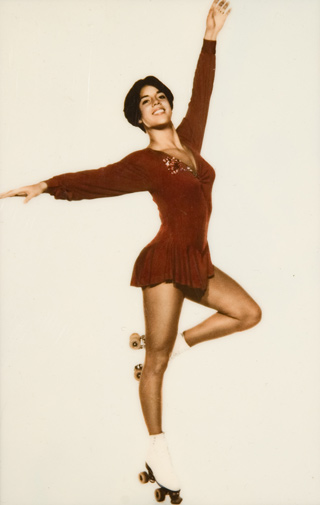
We never got rugby on The Tonight Show but I called my new friend, Howard Papush, a few months later with another idea. Another friend, Natalie Dunn, had just become the first American to win the World Ladies Figure Skating Championships in roller skating, in Rome. An accomplished athlete and beautiful young woman, I looked at Natalie as a potential star.
Intrigued, Howard said to bring her down. We arrived and he was again very generous with his time. More for Natalie’s benefit, we toured the studio, on the way meeting a talented but very troubled rising star, Freddie Prinze. Best known for his leading role in the popular series, “Chico and the Man,” on this day Prinze was very drunk and extremely rude to the point that Howard kept apologizing for his behavior.
Natalie Dunn. Photo courtesy of the Bob Elias Hall of Fame.
This story has a doubly disappointing ending. My friend, the talent coordinator, decided the roller skating idea was a bit too clunky for a relatively small studio stage — and the talented but troubled Freddy Prinze took his own life the next day.
Other than losing my grandparents a decade earlier as a young teenager, Prinze was my first, face-to-face encounter with human mortality.
For me, aging has exposed an allergy to chocolate. Coffee is now a sedative and growing older has reaffirmed my distaste for lima beans, eggplant, cantaloupe and Brussels sprouts.
Needless to say, I am more in touch with the reality of human mortality than ever before, embracing the thoughts: “Don’t put things off. Enjoy today. Rediscover some of that youthful brashness leading to ‘Oh yes, Mr. Rogers, step right this way.’”
By David Rogers. BLOWING ROCK, N.C. — For a lot of people, golf is an adventure sport. Played in the great outdoors, traversing over hill and dale with occasional side trips into the woods, sand traps, creeks or lakes, there is a certain masochistic fun in accepting the challenge of striking a tiny, 1.68 inches in diameter orb with a stick, aiming to make it go into a 4.25-inch hole some 400 to 600 yards away.
The folks who are the original orchestrators of this fun? The golf course architect, of which on a global scale there are only about 300 of them.
It is not as simple as bulldozing a flat spot and cutting down a few trees.
High Country-based Ron Cutlip is one of the newest members of an exclusive club: the American Society of Golf Course Architects (ASGCA). He was inducted last month at the annual meeting in San Francisco. Tracking Cutlip’s career and his path to ASGCA membership provides interesting insights into the creative professionals who enable these on-course adventures.
American Society of Golf Course Architects gather in San Francisco for their annual meeting, with the High Country’s Ron Cutlip as one of the orgranization’s newest members inducted in 2024. Photo courtesy of ASGCA.
According to the ASGCA’s Director of Outreach, Jeff Brauer, who served as the association’s president in the 1995-96 fiscal year, gaining induction into the organization is not as simple as writing a check.
“You have to be an accomplished golf course architect. We go through an extensive vetting process,” said Brauer. “That process includes a review of a candidate’s work, citations by owners he or she might have worked for, then you have to be sponsored by at least three current ASGCA members. And that is all before the ASGCA Board of Governors votes you in.”
Brauer added that the minimum requirement for a new member’s body of work is to have designed at least 100 holes of new courses or in one or more renovations. He pointed out that the earlier requirement was to have designed at least five 18-hole courses, but in recent years the marketplace has changed.
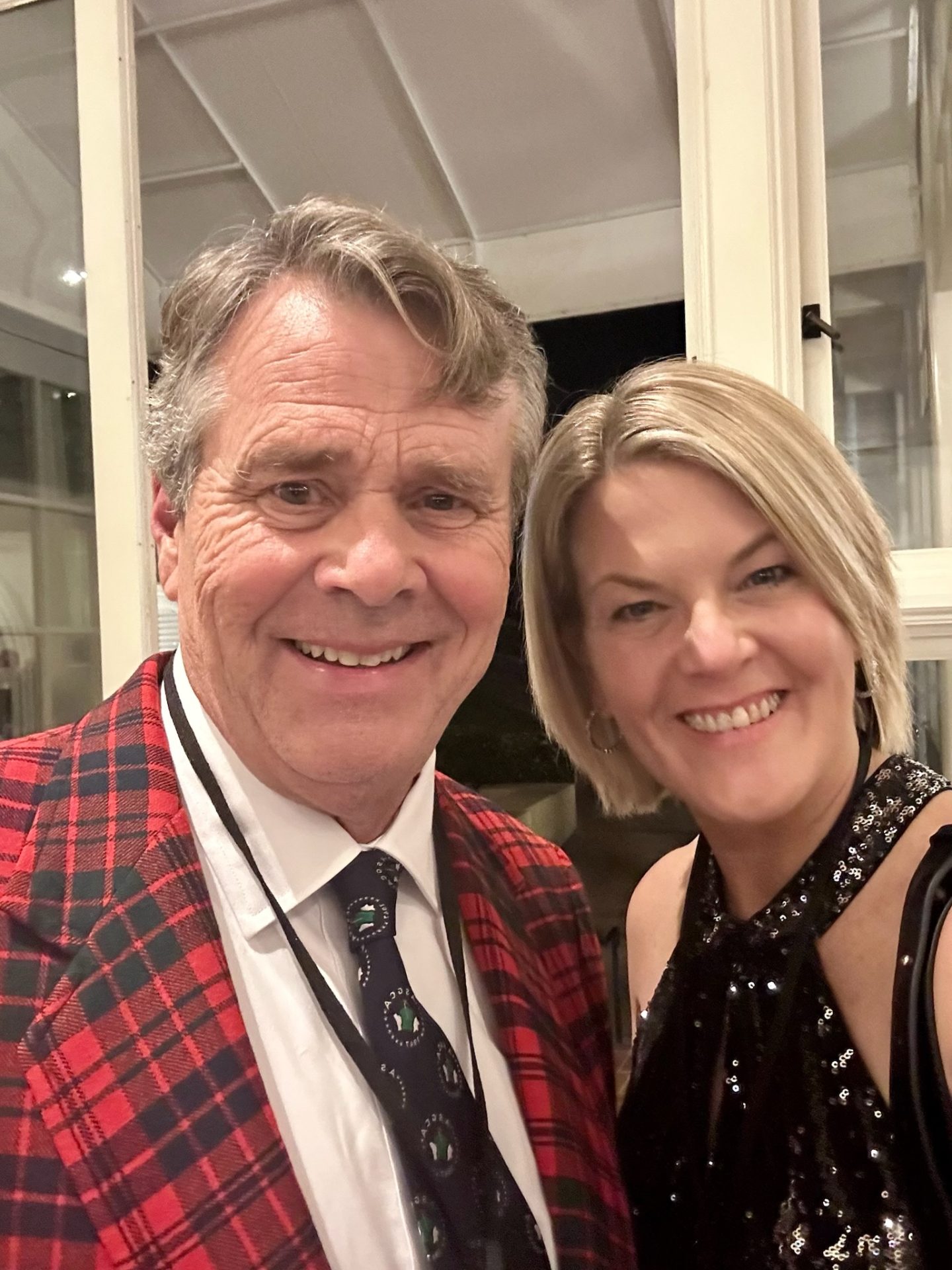
Ron Cutlip and wife Cheryl take a moment in San Francisco where Cutlip was sporting his new Ross tartan plaid jacket as one of ASGCA’s newest inductees. Photo courtesy of ASGCA
“Especially in the last five years and since COVID-19, there has been significant growth in playing golf as people have wanted to be outdoors rather than in confined spaces,” said Brauer. “That led to not only a lot of new 18-hole courses, but a great many course renovations. There have also been many new 9-hole and 12-hole courses. So, moving to a 100-hole requirement just made sense with the new market dynamics.”
He added that the trend toward courses with fewer holes can perhaps be explained by modern-day shorter attention spans as well as the cost of acquiring property and rising construction costs.
Who are these guys?
Golf course architects take great delight in making our outdoor adventures memorable. The rules of the game may be the same on every course, but every 18-hole, 12-hole, or 9-hole journey is created on a different artistic “canvas”: a plot of land with its own unique terrain features. Whether designing a links course near the coast or an up-and-down masterpiece in the mountains, these Michelangelos of sporting adventure use inter-disciplinary skills to give us extra-sensory experiences.
It is not as simple as bulldozing a flat spot and cutting down a few trees. Understanding the game’s various elements is important, of course, but in golf course design other academic disciplines come into play ranging from civil engineering, agronomy, landscape architecture, environmental sciences, turf management, hydrology, physics, geometry, soil sciences, botany, and even psychology to name a few.
Then, of course, there is the business side of things: evaluating market demand, site selection, estimating costs, developing a budget, securing the necessary permits, understanding construction methodologies, master planning, and considering how long it will take for the course to “grow in” sufficiently to enable playing.
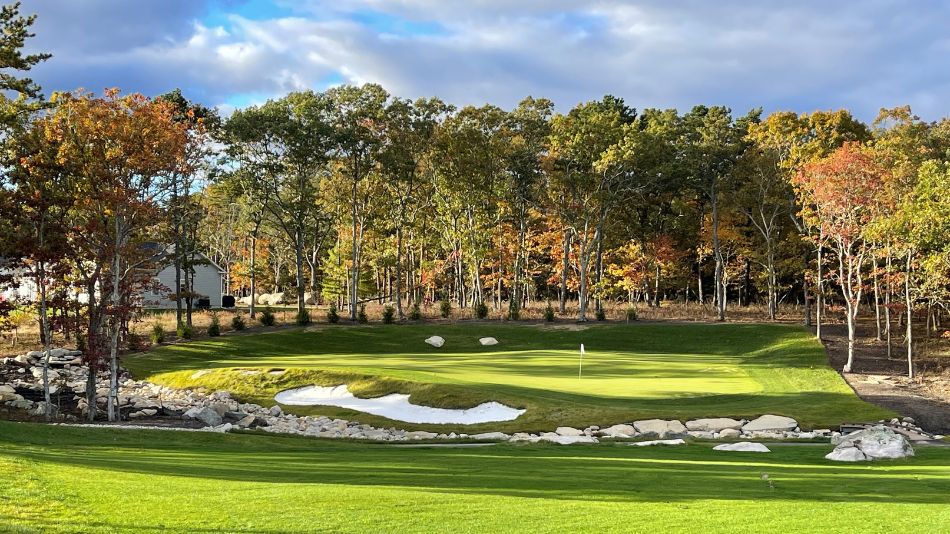
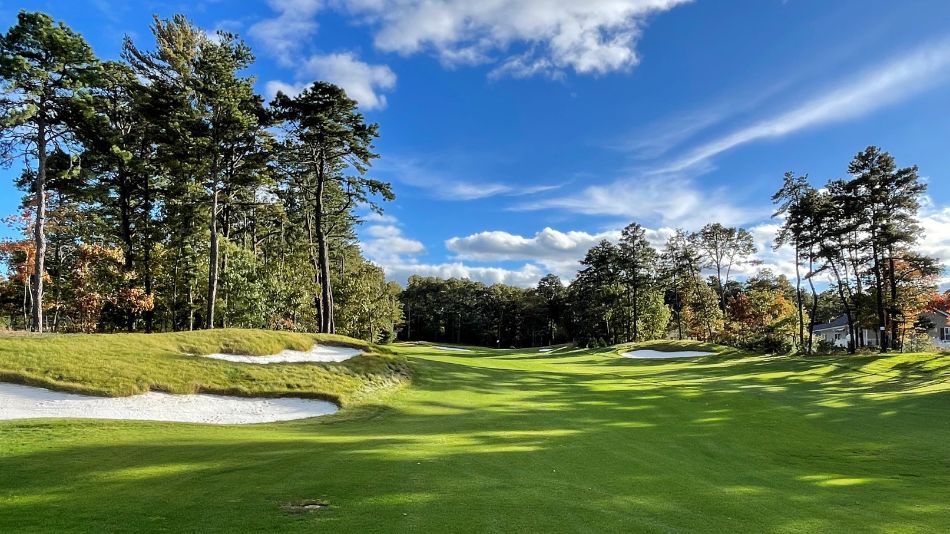
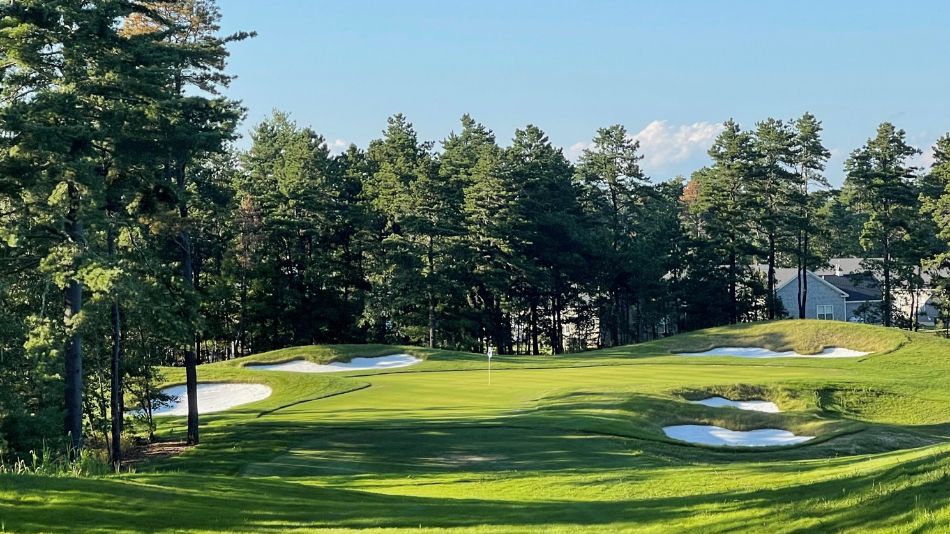
The South Shore Golf Club course’s signature hole is No. 9, the course designed by High Country golf course architect Ron Cutlip. Photo submitted
Understanding the challenges and opportunities of a site’s topography, the region’s climate, the soil composition, and what makes up the site’s natural vegetation helps the designer create a course that harmonizes with its surroundings and offer a unique playing experience.
When all is said and done, it is no wonder that golf course architecture has developed as a professional trade. According to Leading Courses (www.leadingcourses.com), there are 16,572 golf courses in the United States, which amounts to 43 percent of the world’s total number.
A good golf course creates an escape from a person’s normal day.
As one of the world’s premier trade associations for golf course architecture, membership in the ASGCA is by invitation only. According to Brauer, there are fewer than 200 current members in the American society, with other smaller organizations in Europe and Australia.
Cutlip’s latest completed course design is the South Shore Golf Club, a 9-hole course in South Kingstown, R.I., an integral part of the South Shore Village planned community. The course opened last spring to rave reviews and a growing reputation for excellence among serious players. It also now serves as one of the most frequented practice facilities for the University of Rhode Island men’s golf team.
Ron Cutlip, left, greets members of the University of Rhode Island men’s golf team at South Shore Golf Club. Photographic image by David Rogers for High Country Sports
A Donald Ross Connection
Rhode Island and golf have a special connection: legendary golf course architect Donald Ross, who ran a substantial portion of his practice from offices in Little Compton, R.I., his summertime home. Ross is regarded as the patron saint of American golf course architecture, having designed or redesigned 399 golf courses between 1900 and 1948, according to the Rhode Island Golf Association (RIGA). He was a charter member of the ASGCA. Of Ross, legendary PGA professional and golf course architect Jack Nicklaus is credited by RIGA as saying, “He seems to be the standard by which we are all measured today.”
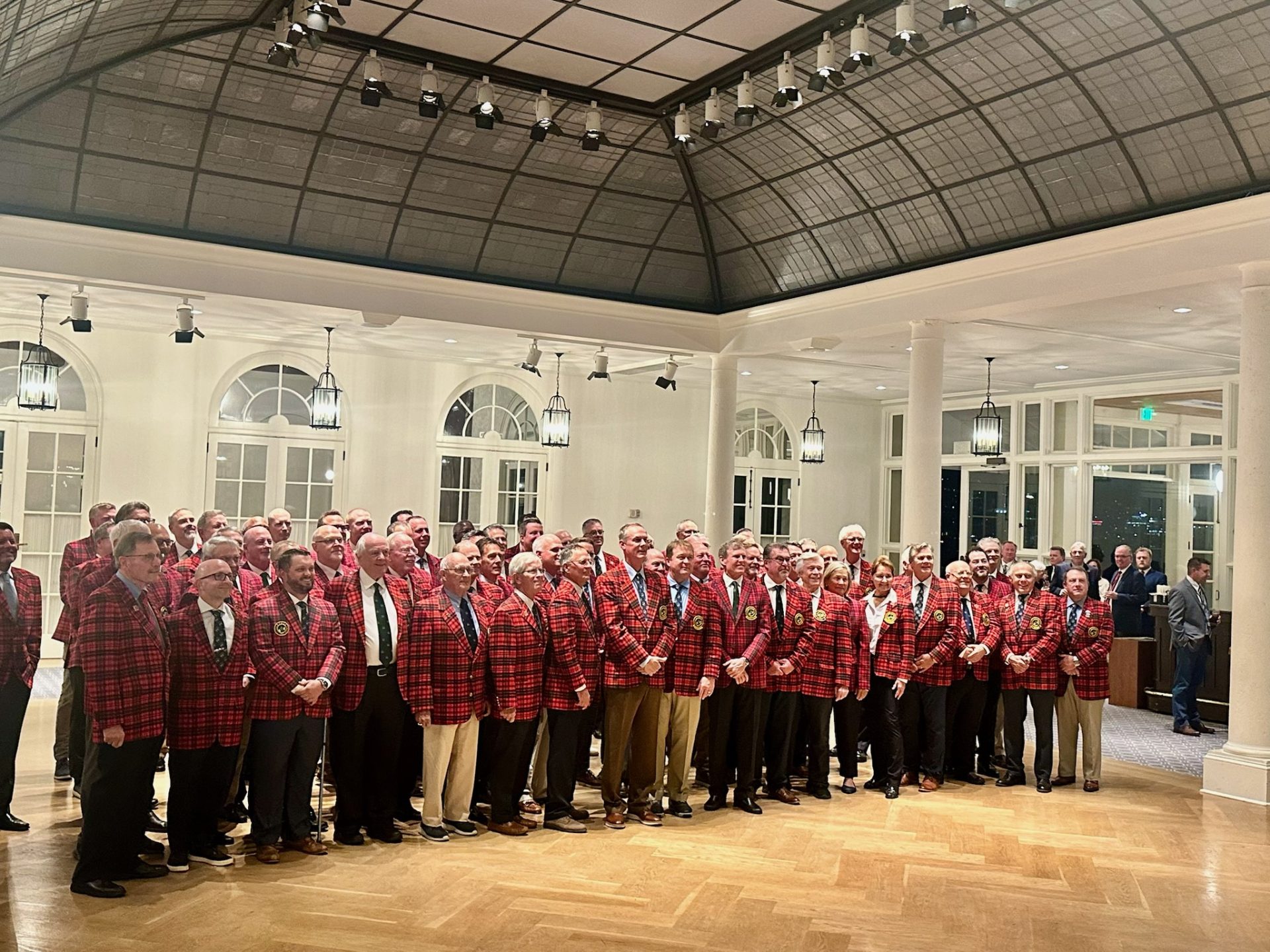
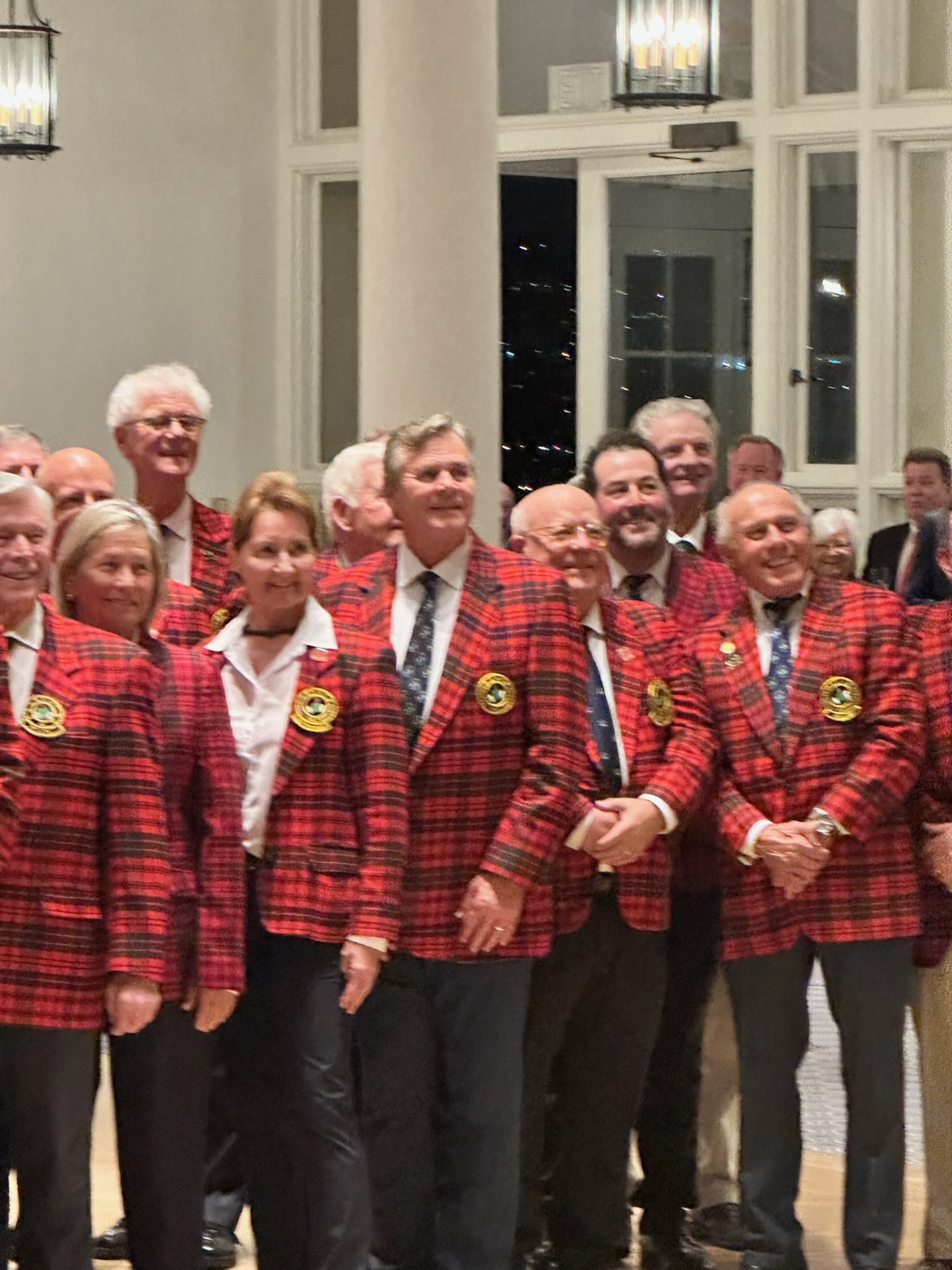
For the ASGCA, those are not idle words since the organization’s trademark, red plaid jacket (worn by all members), known as the Ross tartan, was adopted in 1973 as a tribute to the group’s honorary first president, Donald Ross, a native of Dornoch, Scotland (Scottish clans are identified by their distinctive tartan patterns, to which anyone who has attended the Highland Games on Grandfather Mountain can attest!).
Ron Cutlip playing on the South Shore Golf Club he designed. Photographic image by David Rogers for High Country Sports
Cutlip is among the golf course designers following in the Ross tradition of courses with a “natural” feel to them, taking advantage of the natural lay of the land with little in the way of intense earth moving. For Cutlip, the mental aspect of why we play golf is as important as the physical experience.
“A good golf course design creates an escape from a person’s normal day,” Cutlip told High Country Sports, recently. “In my view, the player is presented with the game of golf as well as with the dramatic beauty of nature. Potentially, even a course’s historic setting comes into play during a round.
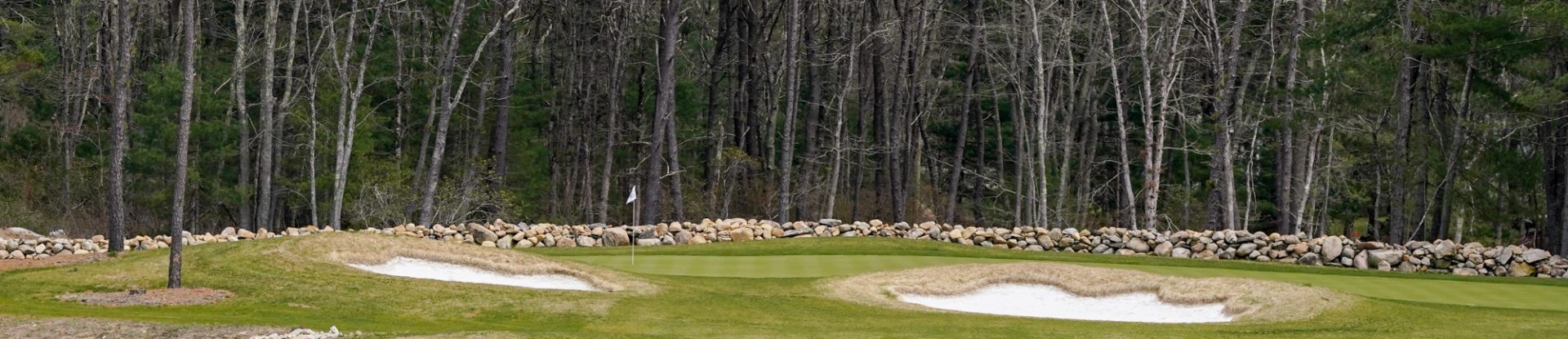
“For example, up at South Shore in Rhode Island, we developed a course that was on a farm with stone walls dating back to the 1600s. For me, it was important that we preserve those walls and integrate them into the course layout,” said Cutlip. “That’s appreciating history and it helps make a course special. We want the player to feel good about their experience and return to play again and again, whether they are a professional player or a weekend warrior.”
Cutlip integrated stone walls dating back to the 1600s into the golf course design at South Shore Golf Club in South Kingstown, R.I. Photographic image by David Rogers for High Country Sports
What’s It All About?
Talking with the three current members of the ASGCA who sponsored Cutlip for membership provided us with not only insights about Cutlip, as well as about the golf course architect’s role in one of America’s favorite pastimes.
“I’ve spent a lot of time with Ron, including site visits to projects and potential projects,” said Rick Robbins in a phone interview. “I feel he has the background and personality to make a good member of ASGCA.”
There are a lot of people involved in the design and construction of a new golf course.
Robbins has High Country connections as the son of Spencer Robbins, one of the region’s iconic figures in tourism and development. Along with brothers Grover, Jr. and Harry Robbins, Spencer had a hand in the creation of Tweetsie Railroad, the Land of Oz, Hound Ears Golf Club and the Elk River Club, among other developments.
Rick Robbins is a past president of the ASGCA, serving in that capacity in 2013-14. He is credited with designing or redesigning 125 courses around the world since 1991, under the banner of his firm, Robbins & Associates International. His U.S. portfolio includes courses in a variety of states, including North Carolina, Georgia, Florida, Iowa, Wisconsin, Texas and Michigan, among others.
When asked if he had any favorite projects, Robbins hesitated because all of his projects have been special to him in one way or another.
South Shore Village Golf Club, South Kingston, R.I. Photo submitted
“Horseshoe Bay in Dore County, Wisconsin is one of the prettiest, nicest courses I have ever done,” he said before adding, “I’ve done four, full 18-hole designs in North Carolina, plus several renovations. A favorite is Mill Creek, in Mebane, N.C. It is on a beautiful piece of land with a lot of rolling hills, creeks and streams and wetlands.”
I love going into the 19th hole and listening to the good stuff of a golfer’s day.
What gets his juices flowing in golf course design?
“Really, it is the balance between field work and the joy of sitting at a table and drawing plans. I enjoy going out in the field and working with shapers on a tractor. Golf course design is very interdisciplinary. We are working with planners, engineers, agronomists, owners… There are a lot of people involved in the construction and design of a new golf course.”
In approaching a new project, Robbins said, “I think about different ways you can play a hole under different conditions. Is the wind behind you or in your face? Can I carry this particular hazard or should I lay up short of it? You really want to give the golfer choices. It is fun to see their reactions to the decisions that have to be made and what goes into their thinking. I love going into the 19th hole and listening to the good stuff of a golfer’s day.”
All in the Family
John Harvey was also a Cutlip sponsor. He started his golf industry career in 1988, when he joined the design office of two well-known golf course architects, Robert Trent Jones, Sr. and Roger Rulewich, after graduating from Michigan State University with high honors in landscape architecture.
In a phone interview with High Country Sports, Harvey described highlights of his career: working on the Robert Trent Jones Trail in Alabama and international projects in Wales and Ireland. In the U.S., his work covers the design or redesign of courses in New York, New Jersey, Virginia, South Carolina, Michigan, Pennsylvania, Connecticut, Florida, Indiana, North Carolina and Texas.
“I knew of Ron for a long time before actually meeting him,” said Harvey. “I was practicing and had my offices in New Jersey, so I knew of him because he was practicing in the New York-New Jersey metropolitan area for many years. A few years ago, we formally met at the wedding of my nephew and his niece. That brought us closer together. It gave me a chance to look Ron in the eye, shake his hand and talk shop, as well as about family.”
South Shore Village Golf Club in South Kingstown, R.I. Photo submitted
It turns out, getting to know Cutlip resulted in encouraging the new member of Harvey’s extended family to also pursue inclusion in ASGCA.
“We have a lot in common,” said Harvey, “both in the people we know as well as work experiences. I encouraged Ron to apply for membership a little over a year ago, so I hope I was the nudge that finally got him to apply. I certainly felt he had the depth and body of work and that he would be a great candidate and a great representative of what embodies the ASGCA.”
Asked why he thought ASGCA membership was so important, Harvey replied, “For golf course architecture, it is the foremost (trade association) in the world. There are other societies, such as the European and Australian, but for someone working in the U.S., membership in the ASGCA is reaching a milestone in your career. It is peer recognition, but it is also marketable in terms of clientele work. It is a feather in your cap, professionally.”
The ASGCA Director of Outreach, Brauer, described becoming a member as being akin to being named to play in the NFL Pro Bowl.
“Attending his first meeting in San Francisco, Ron got to be in the same room as giants in the industry, guys like the late Pete Dye, Jack Nicklaus and so many others. And they treat you like equals. It is a magical experience and I am happy that guys like Ron are accepted. It is a very elite group,” said Brauer.
As for what makes a golf course design special to him, Harvey said, “It is the journey with each course and the people involved, the contractor, the circumstances of the property… it is much more than just the property you are developing. All of my courses have been special, about 125 projects. A couple of special ones that come to mind are Grand Dunes in Myrtle Beach and Ballyowen in Hardyston, New Jersey. I worked on one of the last Robert Trent Jones, Sr. courses in New York, Anglebrook Golf Club in Stomers, N.Y., and Saratoga National in Saratoga Springs, N.Y.”
Harvey concluded the interview by saying how special it has been for him and Ron to have gotten closer in the last five years since their nephew and niece tied the knot.
“It is just so ironic that the world is so small that circles come together, in this case our families and our respective golf industry careers,” said Harvey.
Meeting the Golf Course Philosopher
Forrest Richardson, whose golf course architecture firm is based in Phoenix, Ariz., was Cutlip’s third, but by no means the least of his sponsors. Like Robbins, he is also a past president of ASGCA (2020-2021).
I love going onto a piece of land and creating something spectacular.
Visit his firm’s website (www.forrestrichardsongolf.com) and you quickly surmise that Richardson is a cerebral personality sitting behind the design and planning desk, based on some of his quotes about golf course design:
“Part of the fun (of golf) should be hitting different shots and not always slamming away in pursuit of length. Golf is a thoughtful game, and thinking should always be rewarded.”
“A golf course is a story to be unfolded. For the greatest enjoyment there should be anticipation, intrigue, the occasional chase scene and even a pinch of humor.”
“Golf is supposed to be fun. When you figure out the puzzle, you should score well — and scoring success is something I have always embraced in my work.
Like Harvey and Robbins, Richardson suggested that Cutlip was long overdue for membership in ASGCA.
“I have known Ron for 25 years or more. The golf course design industry is a fairly small world. We are fierce competitors, but we are always best of friends. It is a mantra we all live by. In my opinion, it was long overdue that Ron become a member of the ASGCA.”
Waxing philosophical, Richardson explained to High Country Sports that what you give back to the industry is as important — and maybe even more so — than what you gain through ASGCA membership.
Like the green jacket is trademark apparel for The Masters Tournament, the American Society of Golf Course Architects as the Ross tartan plaid jacket. That’s the High Country’s Ron Cutlip in the center of the first row. Photo submitted.
“Golf course architecture is a rare art form. Perhaps more than with any other art form, it is very important for people in our profession to share ideas,” said Richardson. “There are only about 300 of us worldwide. Over the years, I think we have proven that the sense of community works to the benefit of all. You are learning, but you are also sharing your wisdom. The main focus is not getting work but being part of a group of like-minded people, all involved in one of the most unusual art forms on earth. To appreciate our art, you either have to be playing the game or in an airplane looking down on a course. If you look back at some of the greatest art periods, such as the 1700s, 1800s, 1900s and even today, the art schools and art colonies of those times were important in the development of different artistic styles. I think that same concept applies to golf course design.”
Richardson primarily focuses his work in arid climate projects of the western United States. Look over a portfolio list and you find a lot of Arizona and California courses, as well as sashays into Utah, Oklahoma, Kansas, Montana, Wyoming, Texas, Nevada and Alaska, among other states. But international names crop up in the list, too, including Mexico, Sweden, India and Bulgaria.
Richardson and Cutlip both had contributions to The Hideout course, in Monticello, Utah. Richardson did the final design work. Cutlip did the original work on the project for the U.S. Department of Energy.
“The property previously was a uranium processing site, so this was a reclamation project. The Department of Energy hired me to do the original work for regrading it, which I did so it could be used as a future golf course. Later, Forrest came in and made it a golf course,” Cutlip recalled.
Cutlip’s thoughts on golf course design echoed many of the other professionals who sponsored him.
“I love going out onto a piece of land and creating something spectacular,” said Cutlip. “I want it to look like it has been there a hundred years, that the golf course fits into the flow of the land. I love working with the shapers. I have to have my plans submitted for approval by the land owners and any regulatory agencies, but the true creativity comes when you take those plans and go into the field and start making those adjustments.
South Shore Golf Club, designed by Ron Cutlip, in South Kingstown, Rhode Island. Photo submitted
“The onsite adjustments take the design to a higher level than anything you could ever achieve on a drafting table. I also love the interdisciplinary aspect, working with different types of engineers whether civil, environmental, soil, and others. I will frequently work with architects on the clubhouse facilities. As a golf course architect I am working in the planning and there are a lot of things to consider. Is it in a subdivision or a standalone course? You are working with soil, water, and earth moving.
“Ultimately, what I like to do is take what nature has given me on a property and accentuate it,” said Cutlip. “Like with those stone walls from the 1600s on the South Shore course, I really like taking something old and integrating it with my new course, making it look and feel like they have always been a part of each other.”
Some of the names in Cutlip’s portfolio include Top of the World Golf Club (Lake George, N.Y.), Azalea Sands (Myrtle Beach, S.C.), Mohican Hills (Jeromesville, Ohio), Ramsey Golf & Country Club (Ramsey, N.J.) Stonebridge Golf Links (Lexington, S.C.), Fire Ridge Golf Club (Millersburg, Ohio), Arcadian Shores (Myrtle Beach, S.C.), Pine Hills Country Club (Taylor, Pa.) and Riverdale Country Club (Riverdale, N.J.), Crytal Springs (Hopewell, Ohio) and High Mountain Golf Club (Franklin Lakes, N.J.) and Canyon Club (Armonk, N.Y.), among others.
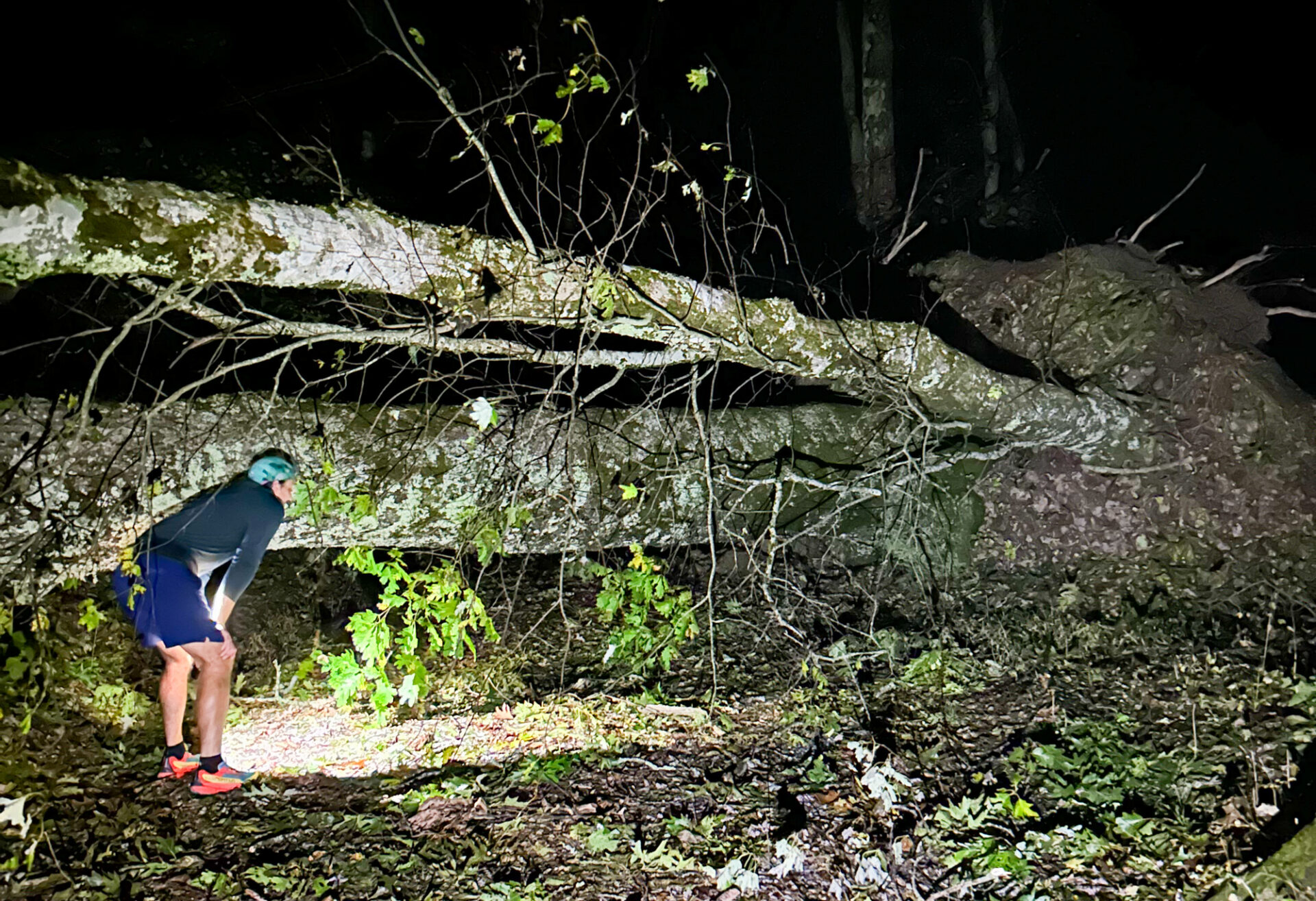
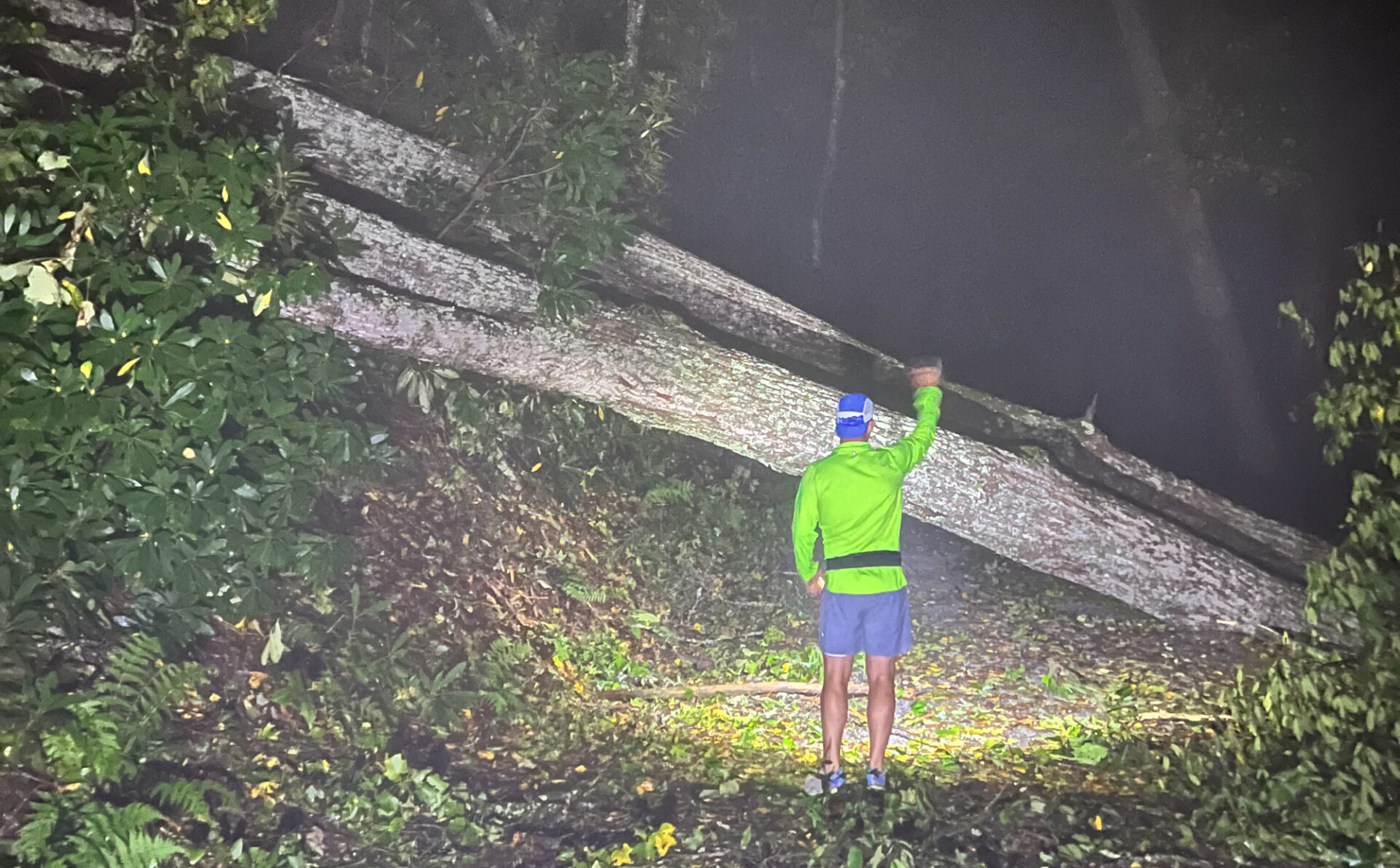
By David Rogers. BLOWING ROCK, N.C. — Standing at the base of a hurricane-toppled tree blocking a Cone Manor Estate carriage trail on a late September morning, Sam Hess is almost dwarfed by the uprooted debris, even with arms fully outstretched.
The Blowing Rock-based CPA, a self-described “numbers nerd,” regularly runs the carriage trails with another local business owner, Keith Shockley. After Hurricane Helene swept through the region on September 27, their early morning runs became a bit more challenging — they usually start at 5:30 a.m., so it is a good thing they sported flashlights and headlamps!
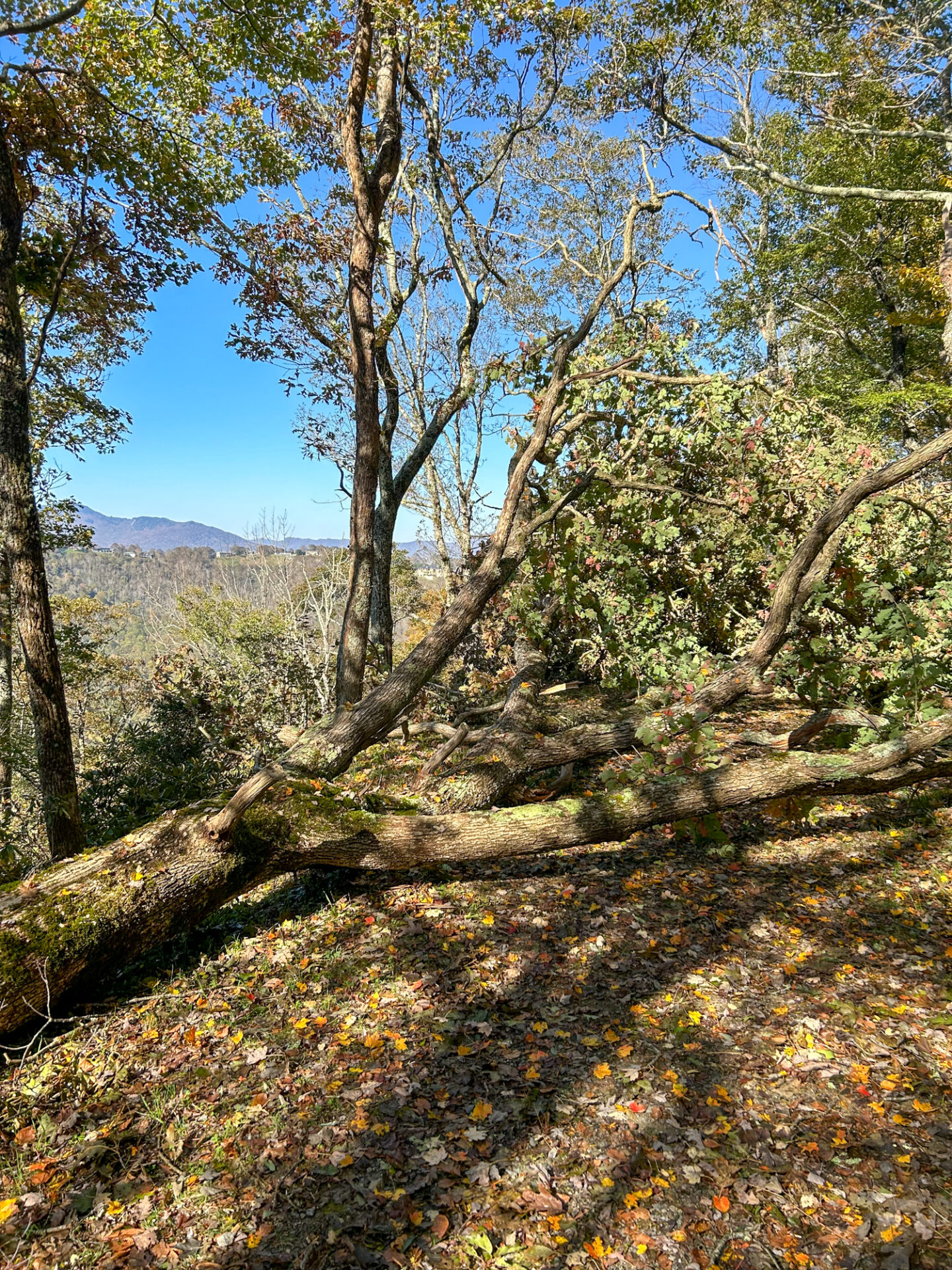
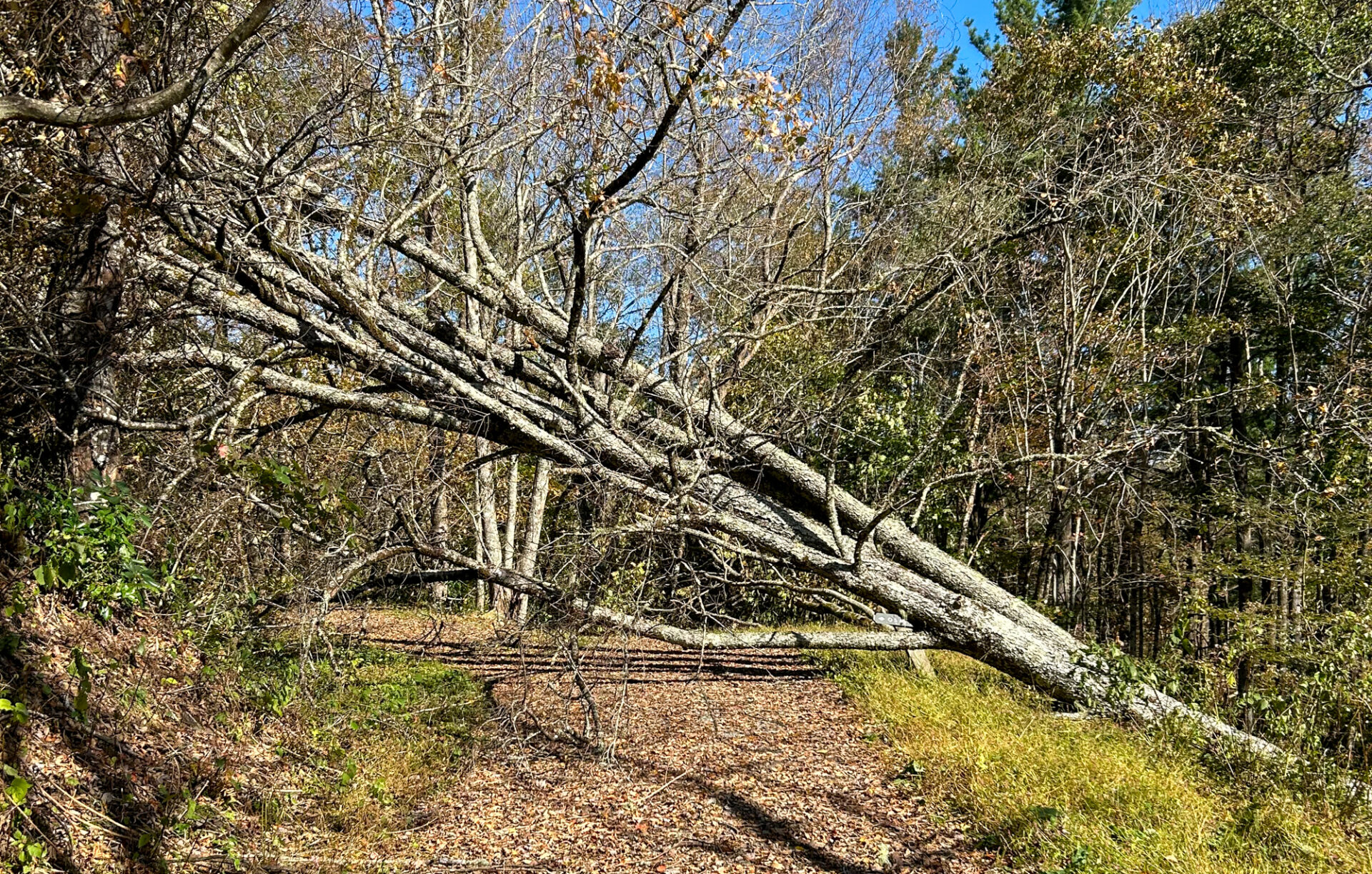
Trees, big and small, had fallen across the trails, creating more of a Mother Nature-inspired obstacle course than a clear path. Hess said he started counting the trees because there were so many of them and he was curious.
“There were 64 trees down across the trail on the backside, the trail going up from near the horse show grounds to the Manor House,” said Hess. “Then we ran The Maze and found 24 trees down. Up to The Firetower? Just 12.”
Photo courtesy of Sam Hess and Keith Shockley
Because The Firetower trail is a little higher elevation with little to protect anything standing against the skyline, one would suspect there would be more down because of the hurricane-force winds but maybe they were strengthened by being exposed to the elements on a day-to-day basis.
I was impressed by how quickly the National Park Service got everything cleared.
“I had never seen so much carnage in this area,” said Hess, in describing what he and Shockley found after the storm. “Even more amazing is how quickly the National Park Service staff cleared the trails. Sure, there is a lot of carnage still along the trails and where they pushed the downed trees off to the side, but I am really impressed and thankful by how quickly they got everything cleared.”
Photo courtesy of Sam Hess and Keith ShockleyPhoto courtesy of Sam Hess and Keith Shockley
By David Rogers. BLOWING ROCK, N.C. — A 3-entry “jump-off” decided the winner. When the sawdust settled, a horse named Corleano — owned by a Wellington, Fla. stable, with a Wellford, S.C. trainer and ridden by a young woman from Austin, Texas — emerged triumphant in the Russell Hall Memorial Classic, a feature event of the Blowing Rock Charity Horse Show on July 28.
BONUS PHOTOS AT BOTTOM OF ARTICLE (click on any image to activate Slide Show mode for best viewing)
A field of seven horses and riders negotiated the twists, turns and hurdles of the Broyhill Equestrian Preserve’s inside arena for the Russell Hall Memorial, with scores of patrons, other riders, owners, trainers and support personnel lining the fences, jamming the box seats, and watching intently under overcast skies (but otherwise dry conditions).
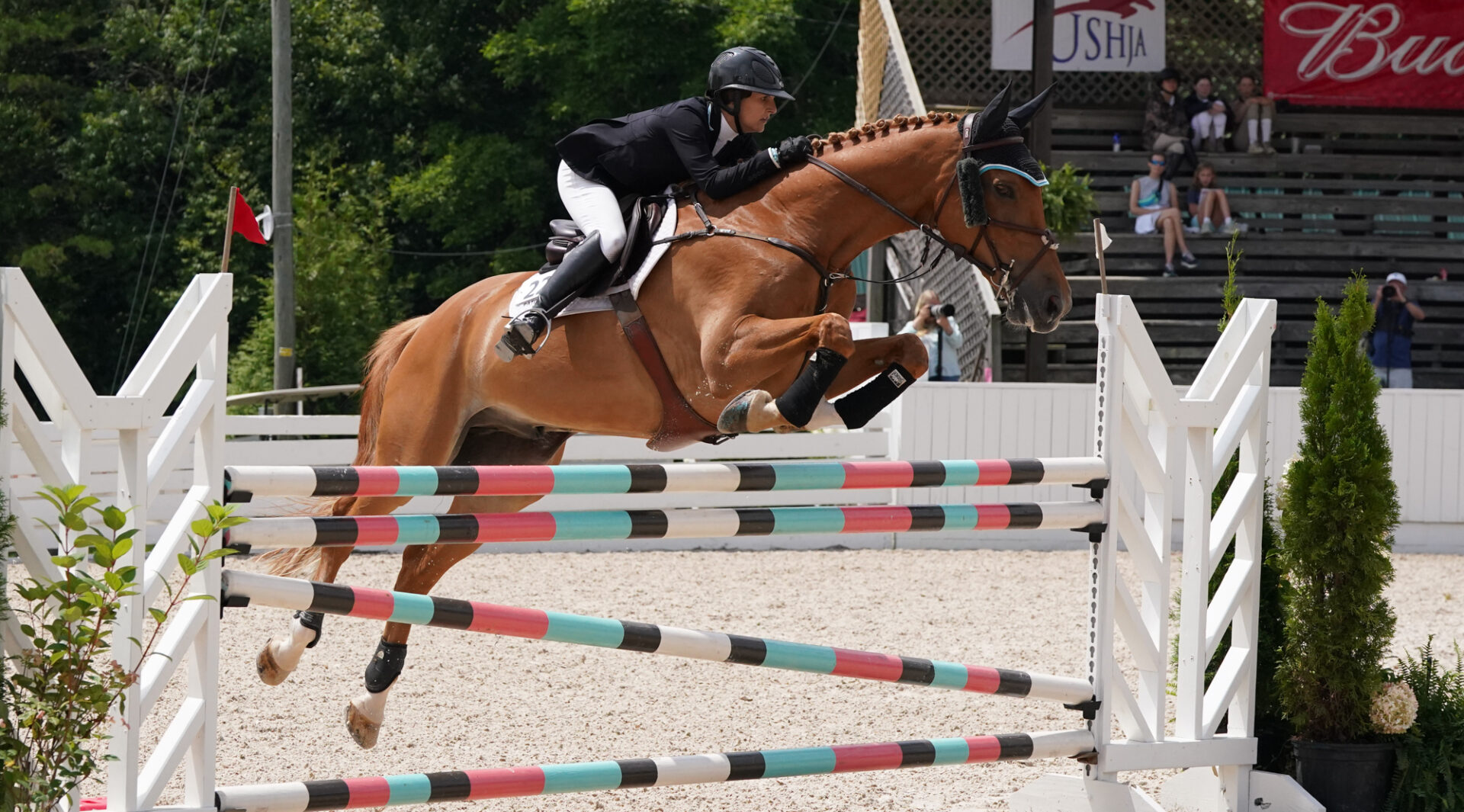
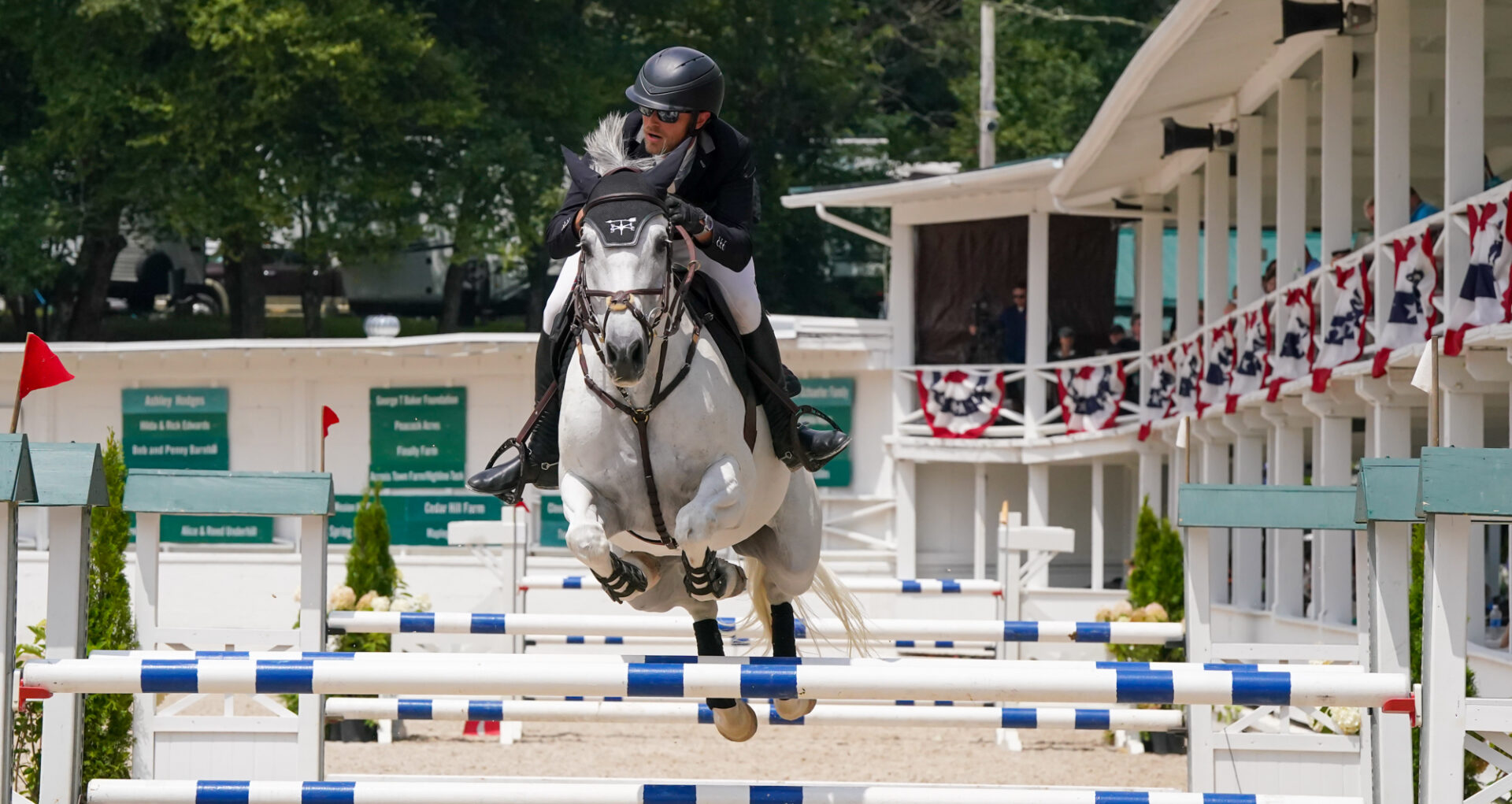
Quinn Larimer on Bronson CR picked up second place in the Russell Hall Memorial Classic on July 28 at the 2024 Blowing Rock Charity Horse Show. Photographic image by David Rogers for High Country Sports
The first four horse and rider duos knocked off at least one rail but the last three all had clean runs, thus forcing the 3-way jump-off.
The last rider in Round 1, Nick Stewart riding Jaspar (owned by Across Town Farm, LLC; trained by Emma Fogler) opted to immediately make his jump-off run but knocked down a rail. Next up was Quinn Larimer on Bronson CR (owned by Nestledown Equine Services LLC and trained by Lauren Kissel) — and he also failed to make a clean run.
Nick Stewart on Jaspar, glances ahead to the next fence, placing third in the Russell Hall Memorial Classic during the 102nd running of the Blowing Rock Charity Horse Show. Photographic image by David Rogers for High Country Sports
The faults of the first two entries may have been miniscule but they left open the door for Corleano and Texas rider Grace Loughlin. As soon as they had traversed the circuit without a hiccup and within the allowed time, the public address declared what everyone already knew: “And there’s your Russell Hall Memorial champion.”
The Blowing Rock Charity Horse Show Foundation hosts three equestrian events each summer, a Saddlebred competition in mid-June and two separate Hunter-Jumper competitions in consecutive weeks at the end of July, with the second week overlapping into early August.
The first Blowing Rock show was staged in 1923 on Green Hill Road, near what is the Green Park Inn. Now the longest, continuous running equestrian competition in the nation, the Blowing Rock Charity Horse Show is in its 102nd year, with one week to go, from Tuesday July 30 to Sunday, August 4.
A popular show especially among high-level equestrians across the South and East, the event features competitors of all ages, from the very youngest amateurs to the most veteran professionals. The Hunter Jumper competition attracts more than 500 horses each year and well over 2,000 event participants to town from all over the U.S.
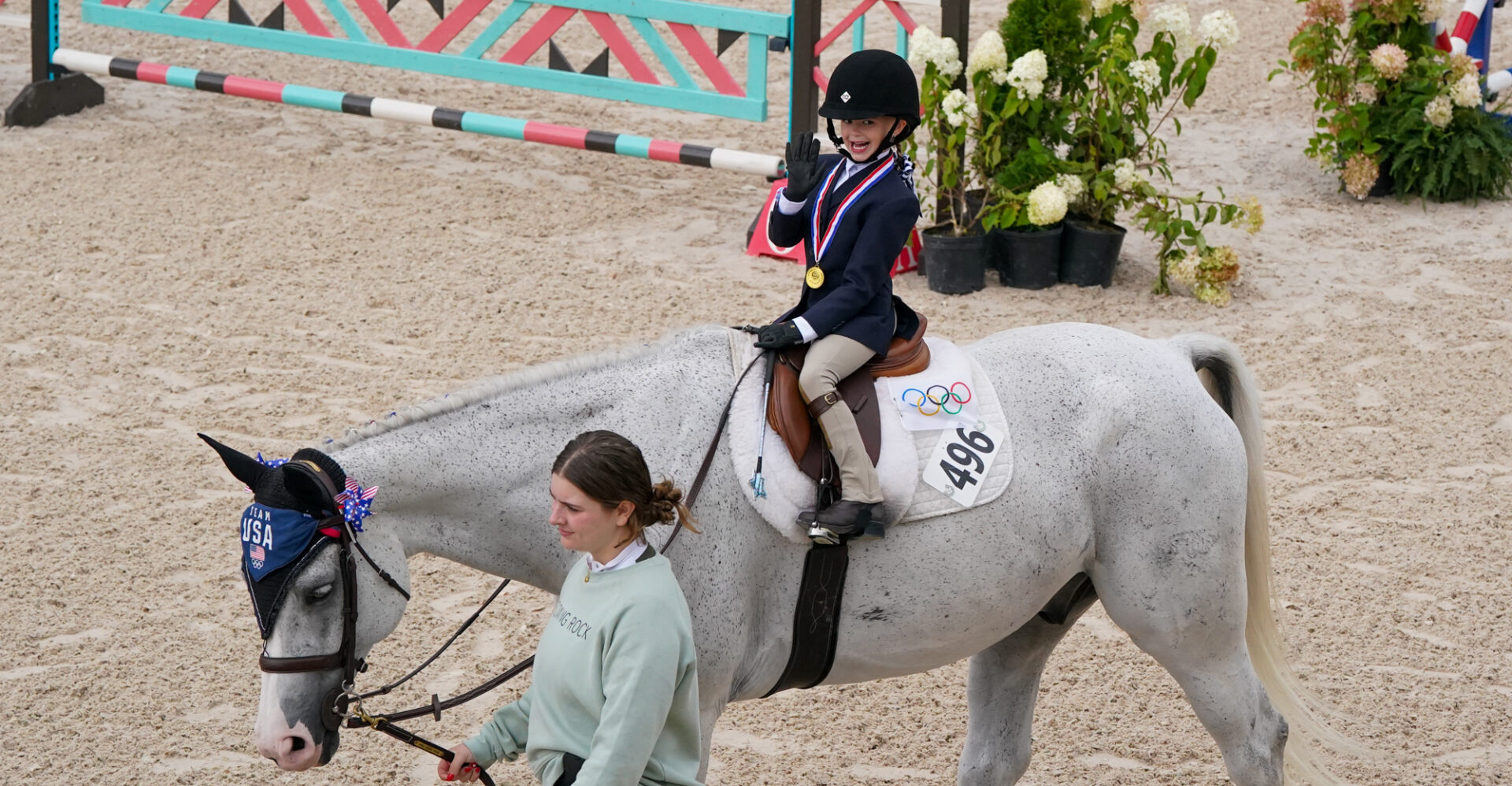
BONUS SCENES FROM THE CHILDREN’S “LEAD LINE” EVENT ON JULY 28
All photographic images by David Rogers for High Country Sports


























































































 a